
Evolution of the Moonwalk 1930s – 2026 pic.twitter.com/DW1TBI1n5x
— Massimo (@Rainmaker1973) September 29, 2026
Jade Carey for Olympics 2028
I’m surprised any selection would not want a proven, durable, experienced Olympic champion like Jade Carey on the Worlds team.
On the other hand, 2026 is a great chance for younger American gymnasts like Charleigh Bullock to get experience.
I’d ask Jade to be one of the top 2 Americans on Floor and Vault in 2027. Strong potential for Olympic medals in the USA.
That should be enough to get her on any Olympic team,
Click PLAY or watch an interview on YouTube.
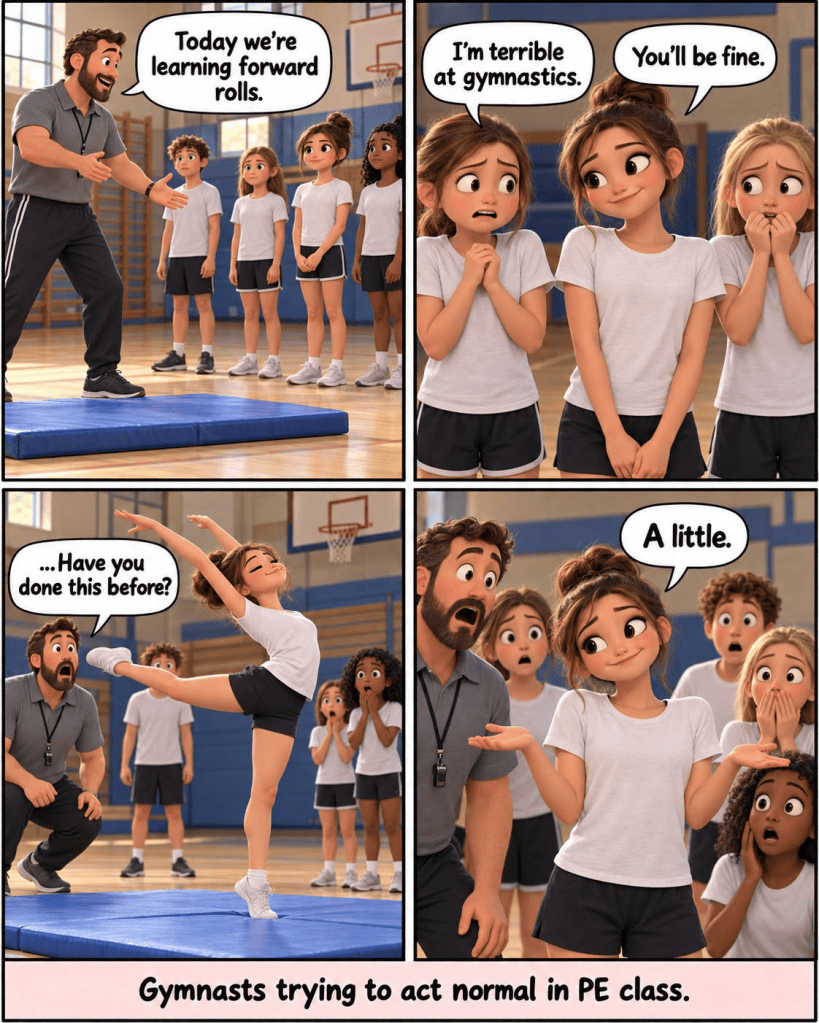
gymnasts at P.E. class in school 😀
Via SuperGymnastics on Facebook.
Hengameh Hadiyani – Vault
Hengameh Hadiani became the first Iranian female gymnast to compete in the 2026 Asian Games since at least 1979. Congratulations to the nation at war with Trump for getting her to the Games.
Carlos Yulo – Floor Asian Games Final
European TeamGym Championships ’26
From 14 to 17 October 2026, the 10th European Championships in TeamGym will be held in the Finnish town of Espoo.
Awesome Gymnastics discipline.
Click PLAY or get a preview on YouTube.
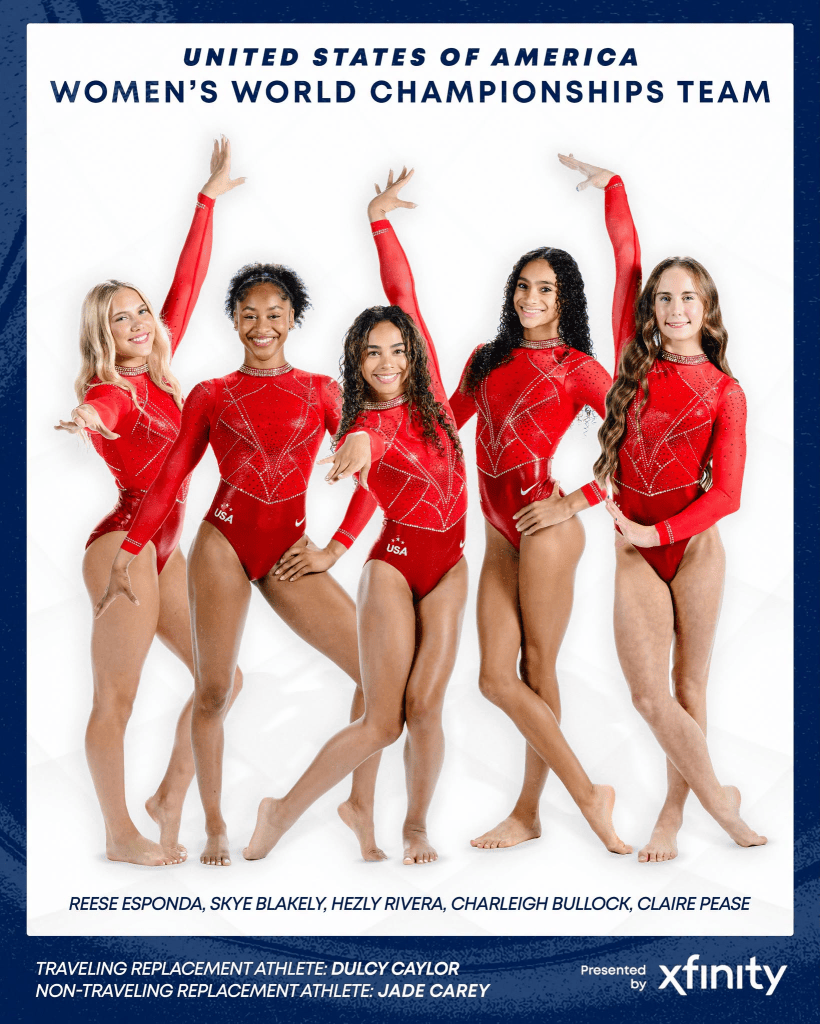
Blakely, Bullock, Esponda, Pease, Rivera
For the USA, this was a non-controversial team selection.
I’m looking forward to see how they compare at World Championships 2026 with China, Japan, and Russia.
Spencer’s LIVE blog:
Only possible surprise to me is Caylor as traveling and Carey as non-traveling, rather than the other way around.
Hezly Rivera hits Bars
It’s been a problem this year.
With Charleigh Bullock on the team, they shouldn’t need to count on Healy’s Bars in the 3-up, 3-count team final at Worlds.
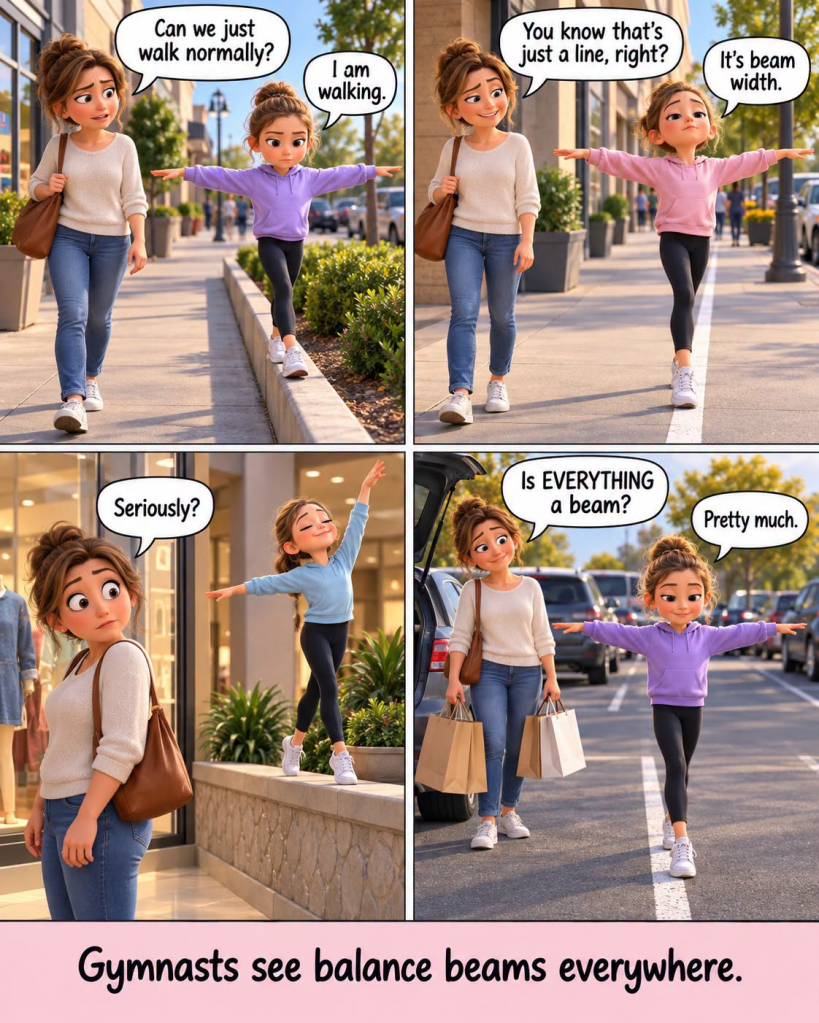
gymnasts see BEAMS everywhere 😀
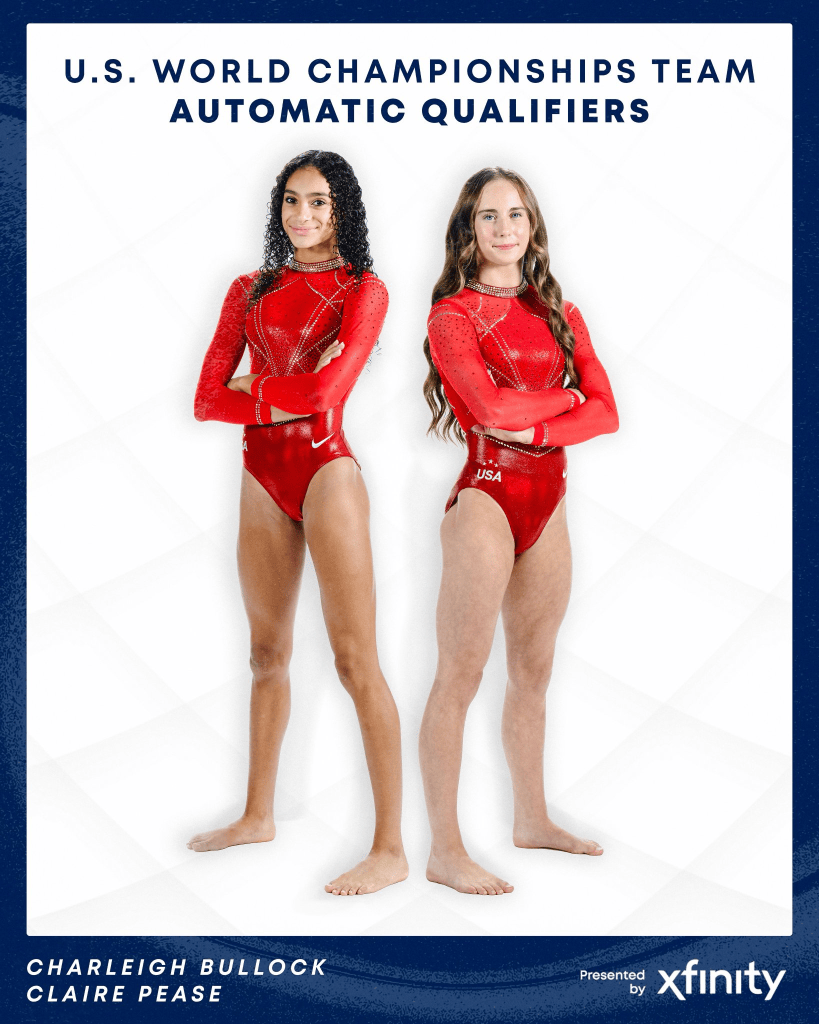
Charleigh Bullock & Claire Pease to Worlds ’26
Based on 40% Nationals + 60% day 1 trials.
Claire Pease (Sunnyvale, Texas/WOGA Gymnastics) and Charleigh Bullock (Spotsylvania, Va./Capital Gymnastics National Training Center) secured their spots on the U.S. women’s roster for the 2026 World Championships following Day 1 of the selection event in Tennessee.
The top two athletes based on a combination of Wednesday night’s scores the all-around totals from the 2026 Xfinity U.S. Gymnastics Championships earned the first two of five roster spots, with the remaining three to be determined Thursday.
On Wednesday, Pease posted the top all-around score (56.700) and had a combined total of 78.340.
Bullock had third-highest all-around score of the evening with a 55.650 and was the second automatic qualifier to the team with a combined 77.610.
USAG – Pease, Bullock lock spots on women’s 2026 Artistic World Championships Team
Skye Blakely looks to be the 3rd gymnast who will be added after day 2 of competition.
Everyone agrees that Hezly Rivera will be named, as well. But she had 2 falls on Bars on day 1.
Click PLAY or watch GymCastic commentary on YouTube.
Spencer posted a LIVE blog — but online streaming of the competition was not consistent.

