- theGymter.net – Everything You Need to Follow the 2026 World Championships
- LIVE scoring
- TV and online streaming
- International Gymnast magazine NEWS
- @GymCoaching on Twitter

tumbling, tramp, diving, acrobatics, circus, cheer, dance, martial arts, X sports … and more
For once, a Beam Final was excellent.
Who could have predicted we’d one day have a World Beam & Bars Champion representing Algeria?
Men’s Vault very good. H Bar a bit of a disappointment as so many of the top guys fell.
Worlds 2027 Chengdu, China is already in the minds of the best gymnasts in the world. The OLYMPIC QUALIFYING Worlds. I’ve already booked my accommodation.
September 29 to October 8, 2027, World Championships is held during National Day Golden Week (October 1–7). That’s a big holiday. Transportation and accommodation will be busy.
Click PLAY or watch Twists & Turns on YouTube.
Click PLAY or watch more highlights on YouTube.
The biggest highlight was seeing Kaylia win Beam after clinching Bars the previous day. She credits her coach Nadia Massé.
Click PLAY or watch it on YouTube.
For me the biggest story at World Rotterdam was the Netherlands government denying visas to eligible gymnasts, including the defending World Champion. That won’t happen in China next year, I’m sure.
But future World Championships hosts need to get some guarantee from their governments it won’t happen again.
Click PLAY or watch it on YouTube.
The best gymnasts in the world will refocus for the BIG Olympic qualifying competition hosted in Chengdu, China.
It’s the same venue that was used for Summer World University Games — the Dong’an Lake Sports Park Multi-purpose Sports Arena.
September 29 to October 8, 2027, World Championships is held during National Day Golden Week (October 1–7). That’s a big holiday. Transportation and accommodation will be busy.
I booked a hostel already. Looking forward to getting back to Chengdu, the Panda city.
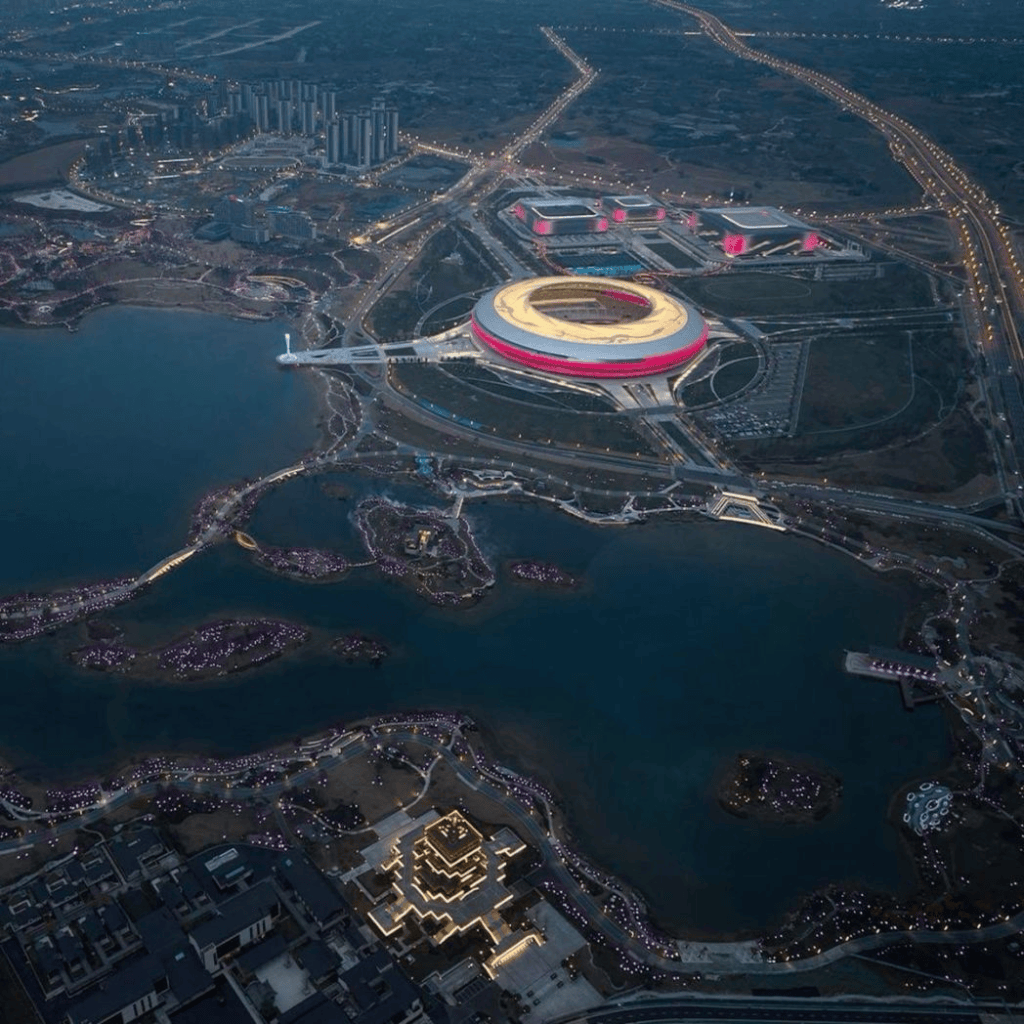
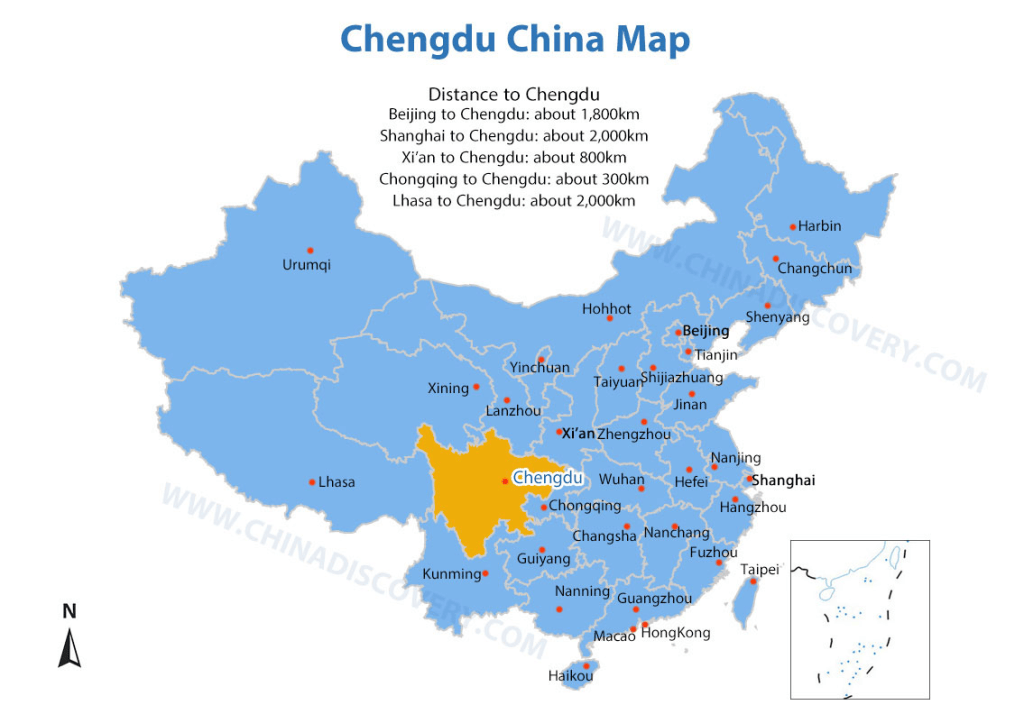
Chengdu is the jumping off point for trips to Tibet.
Click PLAY or watch it on YouTube.
After Pommels, this was the most exciting Apparatus Final for me.
But there were too many falls. Disappointing.
It’s great to see the superstar from Taiwan be World Champion, however. Biggest audience applause was his Wally Whirl late in the routine. Unexpected and unique.
1. Tang Chia-Hung, Taiwan, 14.966
2. Oka Shinnosuke, Japan, 14.800
3. Sergei Naidin, Russia, 14.800
4. Kawakami Shohei, Japan, 14.600
5. Jesse Moore, Australia, 14.433
6. Camilo Vera, Colombia, 13.333
7. Angel Barajas, Colombia, 13.333
8. Yumin Abbadini, Italy, 12.600
Tang Chia-Hung is a Nike sponsored athlete.
Beam was great. Floor excellent.
Judging on this apparatus is opaque to me. BUT they did get the podium right.
Maïana Prat is the full package. Excellent at everything. Took risks with her 1/2 turning leaps — but the judges seem to like them.
1. Claire Pease, United States, 13.866
2. Reese Esponda, United States, 13.566
3. Maïana Prat, France, 13.466
4. Abigail Martin, Great Britain, 13.466
5. Lia Redick, Canada, 13.300
6. Lia Monica Fontaine, Canada, 13.200
7. Lyudmila Roshchina, Russia, 13.100
8. Alice Kinsella, Great Britain, 12.966
image
USA is still the team to beat on Floor. BUT Canada had the highest qualifying Team Score. GBR always good.
You know. The G.O.A.T.
Twitter says Brazil judge gave Zou Jingyuan a 10.0 execution. The first I’ve heard about since Chris Grabowecky gave the last 10 in the old 10.0 code. I’m OK with a perfect 10. It’s the greatest routine on any apparatus in the history of our sport.
This is his 5th World Championship title.
1. Zou Jingyuan, China, 15.733
2. Illia Kovtun, Croatia, 14.900
3. Daniel Marinov, Russia, 14.866
4. Hashimoto Daiki, Japan, 14.600
5. Oka Shinnosuke, Japan, 14.566
6. Arseniy Dukhno, Russia, 14.100
7. David Rumbutis, Sweden, 13.866
8. Noe Seifert, Switzerland, 12.500
I would have had Oka higher, myself.
I’m happy for Daniel, in any case, as it sounds like a judging error denied him 3rd in the All-Around competition.
Algeria has the World Bars and Beam champion.
An excellent Beam Final (for a change). Very entertaining.
TIE between the top two. Tie-breaker goes to Kaylia.
I would have Manila higher in the execution score than Kaylia. They tied at 8.266. Folks will be reviewing video trying to understand what the judges are doing.
Elena, Manila, and Skye were fantastic.
1. Kaylia Némour, Algeria, 14.566
2. Zhang Qingying, China, 14.566
3. Flavia Saraiva, Brazil, 14.300
4. Elena Colas, France, 14.100
5. Manila Esposito, Italy, 14.066
6. Skye Blakely, United States, 13.633
7. Qiu Qiyuan, China, 13.633
8. Okamura Mana, Japan, 12.666
Zhang Qingying won in 2025. Silver in 2026. Already a legend in the sport.
Medal for Norway! First ever at a World Championships.
Jake couldn’t believe it. Artur stuck BOTH his high difficulty Vaults. Magic.
Simone is here. Big smile seeing Kawakami Shohei try her Yurchenko Double Pike.
Artur is from Armenia. They host European Championships April 27 to May 2, 2027 in Yerevan.
Most Vault Finals 10-years-ago or so were super dangerous. Top guys gambled on chucking harder vaults, praying they would land on their feet. NOW the landing is so critical to rank, it’s much safer. FIG MTC got it right.
Quite a good day of Apparatus Finals. Pommels the most exciting. Bars too.
BIG controversy was FIG WTC wrongly devaluing Ellie Black’s Vault. There are several problems in the current Code with why and how they made that error. FIX them.
An even bigger issue came up the next day. In the final rotation of the All Around final in Rotterdam, Joe Fraser competed Floor and accidentally left out a non-value, relatively unimportant corner move. By the rules this should have been a 0.3 deduction. IF judges had taken that, Daniel Marinov would have been Bronze instead of Joe.
It can’t be changed. NOBODY noticed at the time. Judges are to blame, not athletes.
Click PLAY or watch it on YouTube.
Click PLAY or watch more highlights on YouTube.
I had no idea Simone was coming. Uchimura surprised me on his arrival, as well.
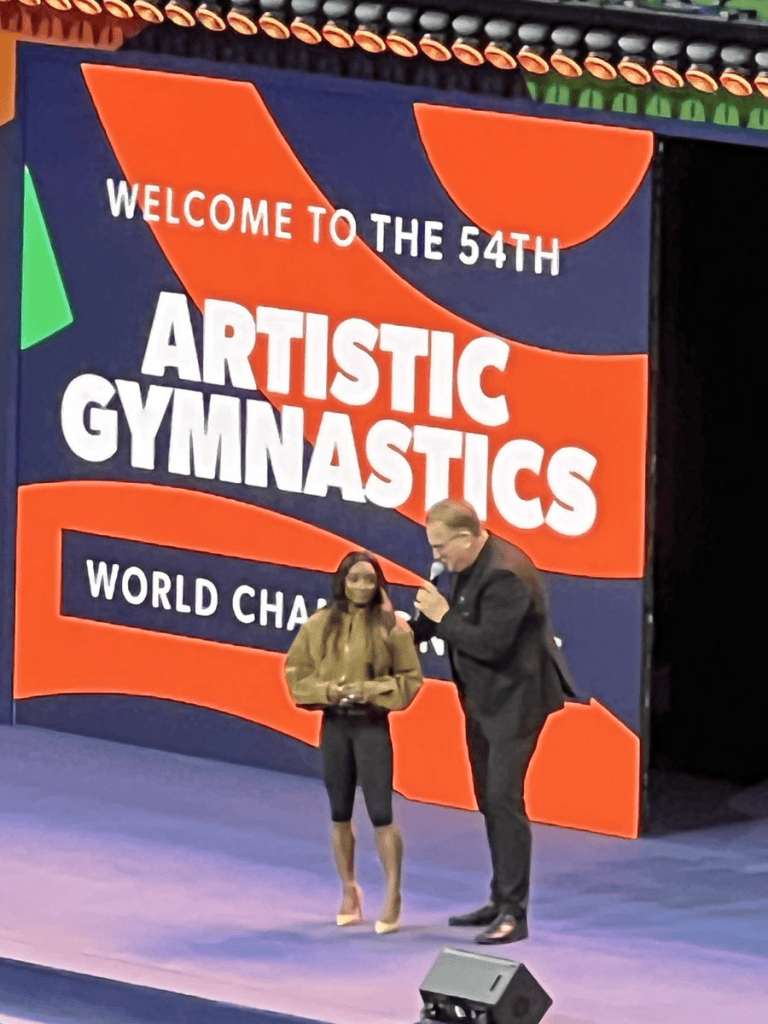
For me the biggest story at World Rotterdam was the Netherlands government denying visas to eligible gymnasts, including the defending World Champion. That won’t happen in China next year, I’m sure. But future World Championships host need to get some guarantee from their governments it won’t happen again.
The 2021 World Champion did it again.
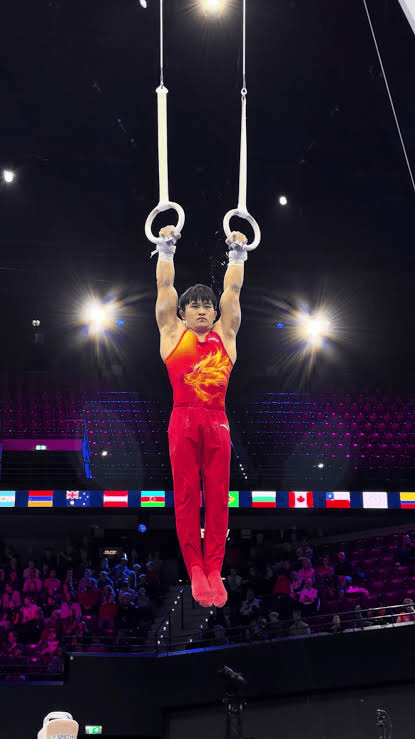
Interview ➙ China’s Lan Xingyu on regaining world still rings title: ‘It’s a huge boost to my state of mind
Zaika had the best strength holds. But 0.3 lower in difficulty than Lan Xingyu. IF Zaika adds the pull to Invert Cross mount, his difficulty score should be highest next year. As Russia is weak on Rings, I’m predicting their specialist will be on the team in 2027.
1. Lan Xingyu, China, 14.766
2. Eleftherious Petrounias, Greece, 14.333
3. Artur Avetisyan, Armenia, 14.233
4. Oka Shinnosuke, Japan, 14.133
5. Ilya Zaika, Russia, 14.100
6. Mehmet Ayberk Kosak, Türkiye, 13.800
7. Courtney Tulloch, Great Britain, 13.366
8. Glen Cuyle, Belgium, 12.833
Fifth worlds rings medal for Petrounias. Legend.
The two using Triple Backs had landing deductions, taking them out of the medal fight.
IF Zaika
What a shocker. 😀
Kaylia used one of her easier routines — without Nemour 1/2 and DLO 1/1 dismount — and still wins with ease. Defending her title from 2025 Worlds.
We really need someone like Suni to come back with multiple connecting skills. Kaylia has no real competition right now.
Rebeca plans to be back on Bars soon, as well. Her goal to help Brazil qualify a full team to the L.A. Olympics.
1. Kaylia Némour, Algeria, 15.333
2. Helen Kevric, Germany, 14.833
3. Skye Blakely, United States, 14.600
4. Elena Colas, France, 14.533
5. Naomi Visser, Netherlands, 14.366
6. Alyona Glotova, Russia, 14.233
7. Giulia Perotti, Italy, 13.266
8. Elisa Iorio, Italy, 12.500
Podium looks good to me. Skye was a little better than Elena and Naomi.
Falls for both gymnasts from Italy.
Interview ➙ Germany’s Helen Kevric finds silver lining in worlds silver on uneven bars

