A terrible landing on Floor. Handspring Double Front.
Click PLAY or watch how her team reacted on Twitter.
#StickItForSam
Sam’s an aerospace engineering major who, upon her graduation in May, has accepted a job to work for Boeing in Seattle.
tumbling, tramp, diving, acrobatics, circus, cheer, dance, martial arts, X sports … and more
A terrible landing on Floor. Handspring Double Front.
Click PLAY or watch how her team reacted on Twitter.
#StickItForSam
Sam’s an aerospace engineering major who, upon her graduation in May, has accepted a job to work for Boeing in Seattle.
Clair had an Achilles tear last season. But I couldn’t have guessed today when she went 9.875 on Floor. That injury can heal stronger than new.
Click PLAY or watch her story on YouTube.
Clair’s younger brother Chris is a new Senior on the Canadian Men’s National team.
Dave Tilley:
Issues like stress fractures, ankle sprains, growth plate inflammation, ACL or meniscus tears, Achilles injuries, and overuse cartilage break down are seen throughout all levels of gymnastics. These injuries all have a common overlap in being “impact” based….
Click PLAY or watch it on YouTube.
On the upside, all that impact results in gymnasts having very dense bones.
On the downside, every coach needs to constantly assess the training plan to minimize the risk of traumatic and chronic injuries.
Dave has some advice.
1. Temporarily Reduce Workloads and Impact Volume
2. Diagnose and Get Medical Care Quickly
3. Be Patient
4. Manage Soft Tissue Daily (Manual Therapy and Stretching)
5. Use Ice Baths and Compression Nightly
6. Land Properly
7. Slowly Rebuild Knee and Ankle Joint Strength Following Injury
8. Slowly Rebuild Impact Volume Following Rehab
9. Correct Technical Issues (Steep Take off and Landing Short)
The other more obvious piece, although it’s shockingly not addressed, is that gymnasts simply need to stop landing short and destroying their ankles all the time. Mistakes obviously happen here and there, but the reality is that far too many gymnasts are being allowed to land very short on a daily basis. …
10. Build Leg Strength with Physical Preparation Programs
11. Track Growth
Click through for details and videos:
11 CRUCIAL WAYS TO COMBAT IMPACT KNEE AND ANKLE INJURIES IN GYMNASTICS
Paris Phillips of the North Carolina State University Wolfpack was diagnosed with juvenile Diabetes after her first semester at college.
Paris posted an excellent article on how she’s dealt with that medical challenge while staying in the sport. In fact, she was only off training for one month total.
Over the past few years Paris has been talking to younger gymnasts and people in sport who have been diagnosed.
Click through for the full story.

(via Luba)
What a terrible week for Australia.
… US-based athlete Clay Stephens (Illinois) ruptured his ACL earlier in the week followed by Commonwealth Games Gold medalist Chris Remkes suffering the same fate overnight at the Artistic World Cup round in Doha.
Having already competed in the recent World Cup events in both Melbourne and Baku, the in-form Remkes had made the finals of both the Floor and Vault in Doha.
Sadly, things went horribly wrong early in his Floor routine with Remkes landing awkwardly on an early pass. injuring his left knee.
Medical scans conducted in Doha confirmed the suspected ACL and meniscus injury, ending his World Cup season and his competing year. …
Chris was injured landing his new triple twisting double layout. The skill was quite well done. The landing not obviously dangerous. ☹️
Mary Lou’s daughter missed her Junior season with a ruptured Achilles tendon. It’s great to see it holding out through her final year.
Or is it her final season? … She’s considering applying for a 5th year.
McKenna is well spoken, energetic and enthusiastic in an interview right after her first 10.0 score.
She feels she’s been the most enthusiastic cheerleader on a team of rah rah team-first athletes. I’m not surprised. She considering doing some motivational speaking in future.
Watch D-D when she sticks her double tuck dismount.
Click PLAY or watch her Senior’s Day 10.0 Floor on YouTube.
Available April 12, 2019.
The publisher sent me a review copy.
Her story hurts to read. But the book is well done.
In Abused: Surviving Sexual Assault and a Toxic Gymnastics Culture, Rachel details her experiences as a competitive gymnast and the painful realities of being one of Nassar’s many victims.
With honesty and candidness, Rachel shares how the sport she loved that gave her so much—friendships, accomplishments, a college education—is also tangled in a dangerously toxic culture that needs to be fixed. In a world that was setting her up for a lifetime of recovery, she tells how faith, family, and an army of survivors made healing possible.
Rachel’s story is not unique. Any gymnast will relate to her detailed accounts of training, competition and injury.
She loved Gym. Thrived in J.O. in Michigan.
In Level 9 she made Eastern Nationals. A huge accomplishment.
But two weeks before her next Eastern Nationals the Gym was sold. She and her coach needed to train so they went to Geddert’s Twistars, a 90 minute drive from her home.
That worked so she stayed at Twistars. It wasn’t long before she was sent to see Dr. Larry Nassar who volunteered at the Gym on Monday nights. The injury was a torn hamstring.
He treated it at the Gym in a small room used to store equipment. She was age-14 when Larry did the first ‘internal manipulation’.
Later she was abused at his MSU office and at his home. Over the next 6 years those internal treatments were continued regardless of the injury.
Rachael has many positive things to say about John Geddert. As well as her Beam coach, John’s wife Kathryn.
Despite increasingly serious injuries, she continued to be very successful in competition. She trusted the Gedderts. And trusted Larry Nassar, the only doctor who told her she could make a comeback after one back injury.
At her first Karolyi camp only one male was allowed in the gymnast cabins – Nassar.
When she went to visit the Minnesota Gymnastics team she was shocked at how different it was compared to Twistars.
Happy to be offered a scholarship, the Minnesota trainers were worried about Rachael’s back. She convinced them to talk to Nassar. And she continued to be treated by Nassar when she could.
Then one of her College coaches, Jim Stephenson, was charged by another gymnast with sexual harassment. He was suddenly gone but the Head Coach — his wife Meg Stephenson — stayed.
Rachael felt the Gopher team began to self-destruct. A few months later Meg quit. It was a bad season.
With two years left on her scholarship Nassar told Rachael to quit for medical reasons. She later realized he was already under investigation.
Rachael refused to quit. Decided to continue for a 3rd year competing only Beam and Vault. Miraculously Minnesota made Nationals in 2016. Another huge accomplishment for Rachael.
Rachael is an amazing competitor. Over her career, she kept finding some way to HIT despite multiple obstacles. Her story is shocking that way. I really admire her tenacity. And her honesty in writing this book.
Click PLAY or watch her on Beam on YouTube.
Four months after her final Gymnastics competition the Nassar headlines hit the media. She told her Mom that she didn’t believe the allegations, worried that her mother would feel responsible for Rachael’s own abuse. At that point, she still believed in her doctor.
In 2017 she finally had the spinal fusion that had been put off for years.
Rachael agonized over joining the other Nassar victims. Especially in telling her parents. But in January 2018 both Mom and Dad attended the hearings with her. She was Survivor 195. Her victim statement was not released in court. But she does include it in the book.
If you still can’t fathom how Nassar got away with it for so long, read this book. In context with everything else that’s happening, it makes more sense. These young women truly believed that Larry had their best interest at heart. They all trusted him.
Part 3 of the documentary following Team Netherlands and their quest for Tokyo 2020.
INJURIES are one of the biggest challenges.
Click PLAY or watch it on YouTube. (posted Feb 13th)
Best case scenario, she’d be back for 2019 Worlds.
CHRISTIAN IVANOV:
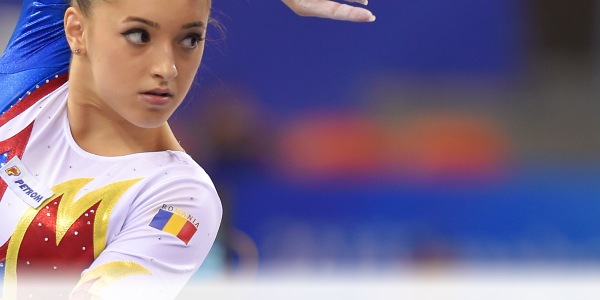
After rupturing her Achilles’ tendon at the 2017 Montreal World Championships, Olympic and World medalist Larisa Iordache, 22, went through several surgeries. IG caught up with the Romanian icon for an interview. …
IG: What is the status of the tendon now? Are you able to walk, run and do light tumbling, and are you pain free?
LI: My condition is very good and the tendon is fine. I do not have pain, and I feel confident. …
IG: You have had a good share of injuries and setbacks in your career? How do you manage to stay positive and motivated?
LI: I have always done nothing but gymnastics, and clearly during the time when I stood around and did nothing, like a normal person, it was not enough for me. My passion for gymnastics keeps me motivated every day. …
Larisa Iordache Is Back In The Game
Click PLAY or watch it on Facebook.

