Vault
Qi Qi 14.566
Yu Linmin 14.116
Liu Jinru 13.449
Bars
Fan Yilin 15.233
Cheng Shiyi 14.866
Liu Tingting 14.700
Click PLAY or watch it on Twitter.
tumbling, tramp, diving, acrobatics, circus, cheer, dance, martial arts, X sports … and more
Vault
Qi Qi 14.566
Yu Linmin 14.116
Liu Jinru 13.449
Bars
Fan Yilin 15.233
Cheng Shiyi 14.866
Liu Tingting 14.700
Click PLAY or watch it on Twitter.
Floor Finals VIDEO
Deng Shudi 14.666
Wang Haoran 14.466
Zhou Caisong 14.366
The two-time world P Bar champion Zou Jingyuan won Pommels with 9.000 for execution.
Pommel Finals VIDEO
Zou Jingyuan 15.100
Xiao Ruoteng 15.100
Wang Junwen 14.700
Click PLAY or watch it on Twitter.
2014 rings world champion Liu won by over four-tenths despite going up first.
Rings Finals VIDEO
Liu Yang 15.400
Lan Xingyu 14.933
You Hao 14.800
Click PLAY or watch it on Twitter.
The Chinese nationals conclude on Monday with the last set of apparatus finals.
Liu Yang and Fan Yilin dazzle in Chinese national apparatus finals
If your guys want to compete but are limited by COVID-19 restrictions, geography or travel costs — here’s a new option:
Compete from the comfort of your own gym, with gymnasts from around the world.
Fantasy Gymnastics, LLC provides a 12-week competition season. (January 4th – April 2nd, 2021)
Note that this program is totally different than other “Fantasy Gymnastics” sites.
All Men’s U.S. Junior Program levels and divisions, Junior F.I.G., Seniors and College gymnasts can compete.
Athletes can upload six or more routines per week
Each week-long competition allows athletes to obtain stars, medals, shields and trophies in the Virtual Trophy room. Share your videos for your friends to see.
The U.S. Junior Men’s National Apparatus Leaders will be head judges on each apparatus.

Click PLAY or watch it on Twitter.
Alecia Ingram was a 4 year National Team member. (1995-96, 1996-97, 1997-98, 1998-99)
At various times she trained at Cypress under Deana Parish and Debbie Kaitschuck, at Dynamo, at Cincinnati Gymnastics Academy, with Don Peters at SCATS, and at Parkettes.
In College she competed for Nebraska and University of Florida, finishing in the autumn of 2003.
Alecia recounts a LOT of bad experiences in this sad, sad post.
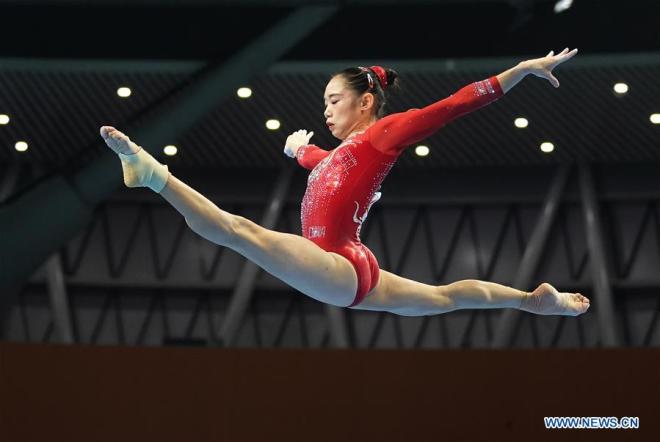
2018 beam world champion held off Wei Xiaoyuan to take victory in Zhaoqing with Qi Qi taking bronze.
The individual apparatus finals take place over the next two days with the vault and uneven bars on Sunday, and the beam and floor on Monday.
1. Liu Tingting 111.100
2. Wei Xiaoyuan 110.600
3. Qi Qi 109.950
4. Lu Yufei 109.800
5. Tang Xijing 109.450
6. Guan Chenchen 107.400
7. Zhang Jin 107.100
8. Liu Jieyu 106.250
9. He Licheng 105.950
10. Yue Yue 105.750
Spencer posted a good summary of the competition.
Click PLAY or watch it on YouTube.
Dave Tilley put together an impressive group of experts:
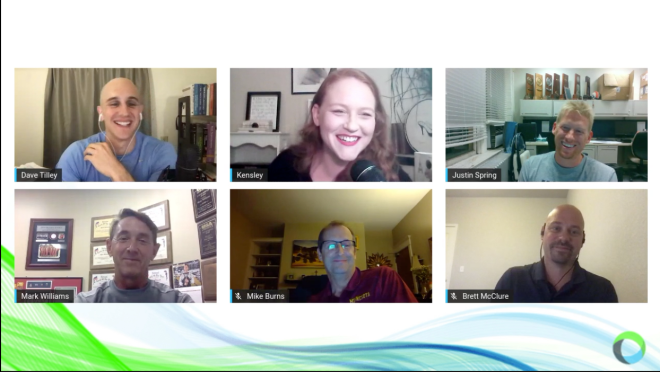
Over an hour and a half, we discuss some crucial issues including:
Click PLAY or watch it on YouTube.
Click PLAY or watch it on Twitter.
 Gymnastics Coaching.com