Bad news from Winter Cup.
The initial diagnosis for Sam Mikulak is that he suffered an Achilles tendon injury #WinterCup
— USA Gymnastics (@USAGym) February 17, 2017

tumbling, tramp, diving, acrobatics, circus, cheer, dance, martial arts, X sports … and more
Bad news from Winter Cup.
Multiple gymnasts from the U.S. team, including members of the gold medal-winning squads in Rio de Janeiro and London, have been interviewed in recent months by the Federal Bureau of Investigation as either patients of the doctor, Larry Nassar, or potential witnesses …
Dr. Nassar, an osteopathic physician, served as a volunteer trainer and doctor for the U.S. national team for almost 30 years …
FBI Interviews Top U.S. Gymnasts in Intensifying Sexual-Abuse Investigation
REPOST with comments from Dr. Bill Sands included.
… Utah’s gymnastics team was dealt its second major blow of the season when freshman Kim Tessen tore her Achilles last Saturday. Tessen had strung together a solid debut season and was coming off her best meet of the year before the injury.
Tessen’s season-ending injury follows up Sabrina Schwab’s season-ending ACL tear. …
Tessen is the fifth Red Rock to tear her Achilles in as many years. But Utah isn’t unique, as several other teams have watched athletes succumb to the same injury this season and over the years.
“I think last year we (NCAA teams) had 16 Achilles tears reported, and this year we are already at eight or nine,” said Farden. …
Utah gymnastics still focused despite second season-ending injury
Leave a comment if you have ANY idea how we might reduce the number of Achilles ruptures.
Read a thread on the topic on College Gymnastics Board.
William A Sands, PhD, FACSM:
The Achilles tendon injuries, particularly ruptures are complex. Having studied this problem for over 20 years, I believe there is a small constellation of causative factors working separately and together. However, prediction and prevention remain elusive. I have several presentations with high-speed video of athlete and spring floor interactions, but the files are quite large. I’ve presented at the USAG Congress on this very topic more than once. Seems like it always falls on deaf ears. Well, one more try…
James Linderholm alerted me to a recent discussion on Achilles tendon injuries. I saw a list of these injuries on Rick McCharles site. Below are some references to which you might want to refer when describing and discussing what is known about these injuries and some potential causative factors.
In my view, there are several potential causes, almost impossible to tease apart.
1. The wear-and-tear of long years of training is certainly a factor. Countermeasures for this include the use of ultrasound to examine the tendon and other local structures.
2. We can probably infer from a number of studies that injury incidence and rate are linked to body composition and anthropometry (ie weight and size). Countermeasures for this can include technique alterations, nutritional interventions, and reduction of training load.
3. Floroquinolones are known to cause problems with connective tissue strength and load characteristics. I will assume that most, if not all, sports medicine professionals are aware of this problem and no longer use these types of antibiotics. However, it may be worth a check to ascertain the role(s) of these medications, history of use, and so forth. The evidence, in my view, is pretty clear. Unfortunately, long-term use has not been investigated sufficiently for determination of whether historical use may cause problems. I’m not a physician, so please check with your team doctors.
4. Technique may be involved in that anecdotal discussions have indicated that athletes with low take-off impact angles may be more vulnerable. Most, but not all, Achilles tendon injuries occur during take-offs when ground reaction forces can exceed 15-22 times body weight. Work by Bruggemann and colleagues has shown that the bundles of the tendon are load differentially depending on placement of the feet, ankle and foot anatomy, and other factors.
5. The spring floor may contribute. I have made efforts for more than 20-years to study the spring floor and its relation to take-off injuries. AAI and Whitey Anson have been very generous in helping me work on this problem. There are some interesting aspects that are addressed in citations below, and on my website: http://www.advancedstudyofgymnastics.com. Interestingly, Achilles tendon injuries have occurred on coil spring floors and foam-type floors. I believe that the natural frequency responses (rates of vibration from depression to rebound) are not consistent between the gymnast’s lower extremities and the spring floor. Unfortunately, equipment companies must follow FIG specifications and I believe these specifications, while ensuring some uniformity in design, do not take enough account of biological factors. It is also interesting to note that when T&T coaches are queried about Achilles tendon injuries – these injuries are practically unheard of. Note that the tumbling apparatuses are very different from the artistic gymnastics spring floors. On querying T&T coaches I found that only one Achilles tendon rupture was recalled, and this athlete was a former artistic gymnast and approximately 35-years old. High-speed videography of T&T tumbling surfaces has shown that the lower extremity mechanics are quite different from those used on artistic gymnastics spring floors. T&T tumbling strips are simply more forgiving than artistic gymnastics spring floors.
6. EVERYONE wants to reduce or eliminate these injuries. I hope the information below will enhance discussions that lead to countermeasures that work.
Tyesha Mattis is currently a
firstthird year senior gymnast after having an extremely successful junior career.
British Gymnewstics posted an excellent catch-up on her career. Major injuries – mostly from Vault landings on competition surfaces – have slowed her progress.
Click PLAY or watch it on YouTube.
Somehow I missed the August 2016 launch of this site. 🙂
I’m subscribed now.
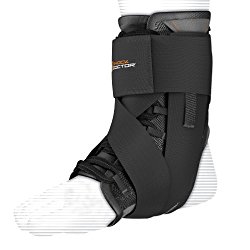
Check a sample post – Heal A Sprained Ankle Fast! – HEM Ankle Rahab
Her daughter used a lace-up ankle brace successfully.
related – Crazy Gym Mom on Facebook
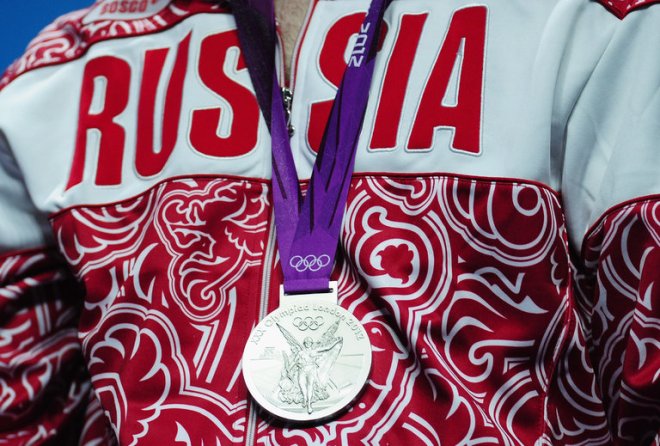
Russia is for the first time conceding that its officials carried out one of the biggest conspiracies in sports history: a far-reaching doping operation …
Over several days of interviews here with The New York Times, Russian officials said they no longer disputed a damning set of facts that detailed a doping program with few, if any, historical precedents.
“It was an institutional conspiracy,” Anna Antseliovich, the acting director general of Russia’s national antidoping agency, said …
Russians No Longer Dispute Olympic Doping Operation
They still claim Putin did not know.
Russia was stripped of speedskating and biathlon events it was due to host this winter. Russia had previously been denied hosting world bobsled and skeleton championships.
… The new arrest on Friday is based on a federal indictment in which Nassar is charged with receipt and attempted receipt of child pornography and possession of child pornography. …
This is addition to his previous charges.
A new report by the world’s antidoping watchdog has laid out mountainous proof of Russia’s systematic doping from 2011 to 2015, implicating layers of government employees and more than 1,000 athletes in over 30 sports …
Report: Russia’s Doping Program Involved More Than 1,000 Athletes
Michigan Attorney General Bill Schuette’s office obtained a felony warrant for Dr. Larry Nassar this morning on three charges of first-degree criminal sexual conduct with a person under 13, according to court records. The charges carry a maximum sentence of life in prison.
The alleged abuse took place at Nassar’s home in Holt between 1998 and 2005, according to court records. …
Schuette and Michigan State University Police Chief James Dunlap have scheduled a news conference for 1 p.m. Tuesday afternoon to provide “a brief update on the investigation …
 Gymnastics Coaching.com