Koreleo Compression-Based Leotards

Guest post by Faith Mason.

Koreleo Compression-Based Leotards Address the Demands of Todays Gymnasts

Precision-Engineered and Science-Backed, Training Leo’s Delivers Unrivalled Functional Support, and Enhances Performance. 

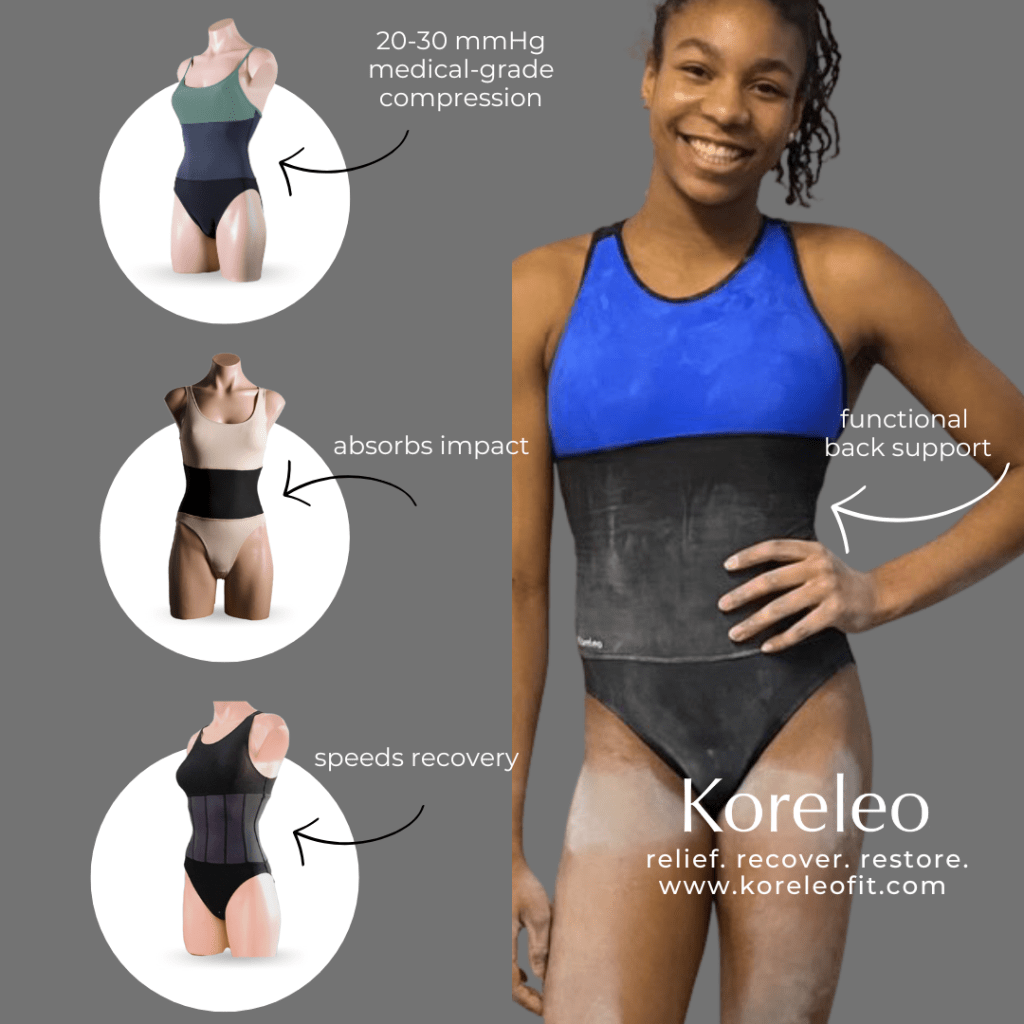
Through the strategic integration of 20-30 mmHg medical-grade compression into the core of all Koreleo apparel, gymnasts can now access quantifiable relief from lumbar inflammation and safeguard themselves against overuse and repetitive injuries. This proprietary compression technology is sourced from a reputable USA textile mill renowned for its expertise in medical applications. Rigorously tested, scientifically proven, and patented, Koreleo’s cutting-edge collection transcends traditional leotards and singlets, ushering in a transformative training and recovery experience with its hallmark features:

Benefit from:

  • Dynamic lumbar support (that stays in place)
  • Inflammation Control
  • Impact absorption 
  • Raised receptor awareness/proprioception
  • Speeds tissue repair and recovery
  • Flushes lactic acid away
  • 20-30mmHg Medical Grade 1 proprietary compression
  • May prevent certain over use injuries
  • Tested, proven and patented technology

For details, click over to:

www.koreleofit.com
Sweden’s Tonya Paulsson – comeback

Four months post surgery.

USA’s training centre for Paris Olympics

Team USA are ready to settle in a small French town, far from the hustle and bustle of central Paris, when they set up their quarters at the revamped Athletica centre for this year’s Olympics.

Some 1,200 athletes and staff will use a state-of-the-art facility in Eaubonne, which has a population 25,000 and is 15km north of Paris, after the Athletica training centre’s renovation is completed in a few weeks.

“It’s really close to the athletes’ village, so it’s really convenient for our athletes to go back and forth,” Rocky Harris, chief of Sport and Athlete Services at the U.S. Olympic and Paralympic Committee (USOPC), told Reuters.

… features high-tech massage tables, cryotherapy units, physiotherapy rooms and about 100 bedrooms.

Reuters

Click PLAY or watch it on YouTube.

Fuzzy Benas interview

What a story!

Christy Sandmaier:

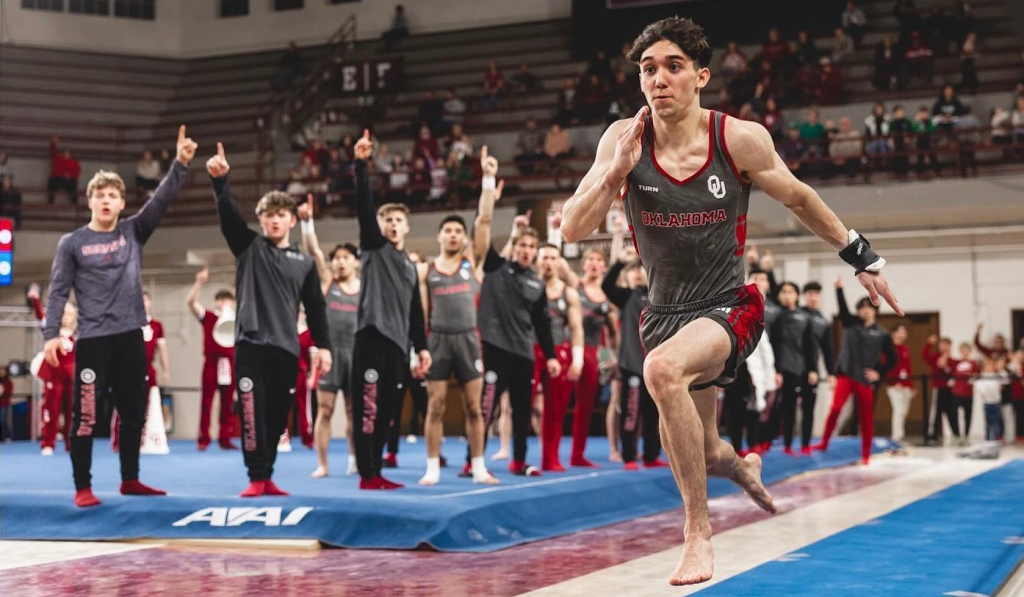
After winning national “Rookie of the Year” honors, Benas underwent shoulder surgery following his freshman NCAA season in 2022. Then, just as he came back from that injury, a pumpkin carving accident severed a nerve in his hand, requiring a four-hour surgical repair. Just two days after being medically cleared to resume training after his hand injury, Benas suffered an Achilles tendon tear while training on floor.

“Difficult doesn’t really describe it,” Benas says of his long road to recovery. “I admit there were some dark times, when I wondered if I’d be back here, but now I am and, yeah, it feels good.”

At January’s Rocky Mountain Open, Benas, competing in his first All-Around competition since April 2022, put an exclamation point on his comeback, earning the highest tally of his career, and the NCAA season to date, with a massive 85.2 six-event total. …

Inside Gymnastics – Call it a Comeback – Oklahoma’s Fuzzy Benas is back, and better than ever

“Enhanced Games” with no drug testing?

One again, dumb people are planning a multi-sport games with no restrictions on performance enhancing substances.

Gymnastics included.

Here’s what happened last time this idea came up. 😀

Click PLAY or watch it on YouTube.

should FIG require a proper “landing”?

Male FIG gymnasts must show control on landing. I’d say right now there is TOO MUCH emphasis on STICK in MAG FIG.

Obviously, FIG women have never been required to show control. Absolutely no control often results in a very small deduction for WAG.

I’m of mixed feelings on this question:

should FIG require a proper “landing”?

On the one hand, it would force coaches to include dismounts that are more fully mastered. A good thing. AND it would help separate the best of the best routines.

On the other hand, I fear more injuries on landing might result. Stepping or hopping out of a high impact landing is an excellent way to dissipate forces. Gymnasts trying to “SAVE” a competition landing could suffer more injuries.

Click PLAY or watch it on YouTube.

Giarnni Regini-Moran documentary

Giarnni’s quest for Paris.

The comeback from posterior cruciate ligament injury.

Inspiring.

Click PLAY or watch it on YouTube.

FIG Para-Gymnastics webinar

Gymnastics and acrobatic sports are difficult to modify for the Paralympics.

However, 12 nations have Para-Gymnastics programs running already.

Special Olympics Gymnastics is much more available.

The inclusion of gymnastics in the programme of the Paralympic Games has always been part of FIG President Morinari Watanabe’s vision. In this sense, the FIG has created the Paralympics and Special Olympics Working Group that is actively working towards the inclusion of the discipline in the programme of the Paralympic Games. To help achieve this goal, a roadmap has been developed. 

We are happy to invite you to watch the first para-gymnastics webinar on the FIG Education YouTube channel. 

via email

Click PLAY or watch it on YouTube. #inspiring

FIG WTC Antwerp Worlds Report

2023 FIG Artistic Gymnastics World Championships Antwerp, BEL

Women’s Artistic Gymnastics Technical Committee Report

WaPo investigation into NCAA abuse

For many, many gymnasts the opportunity for a College scholarship to gain their education is a fantastic experience. Indeed, the vast majority of gymnasts I’ve spoken with are happy with their decision to compete after Club.

BUT it doesn’t work for all. I’m particularly concerned about risk of serious injury competing so many times each season in NCAA.

Recently, Molly Hensley-Clancy and Emily Giambalvo did a deep dive into female college gymnasts complaints for the Washington Post:

Beneath NCAA gymnastics’ glow, a familiar ‘toxic’ culture

Female gymnasts say college was supposed to offer a reprieve from intense club programs. Then they arrived on campus and found more of the same.

I believe that story is not behind the paywall.

Schools identified in the article:

  • University of North Carolina
  • LSU
  • Utah
  • Penn State
  • Clemson
  • Utah State

Eating disorders are common for many young women, especially college athletes. But studies consistently find female gymnasts are at a staggeringly high risk, with a 2004 study finding 42 percent of gymnasts and other elite “aesthetic sport” athletes, such as figure skaters, had disordered eating habits, compared with 16 percent in sports like soccer or basketball.

Certainly I believe the complainants.

I also believe that many of their teammates had positive experiences with the same coaches. Both can be simultaneously true.

Are things getting better in the NCAA?