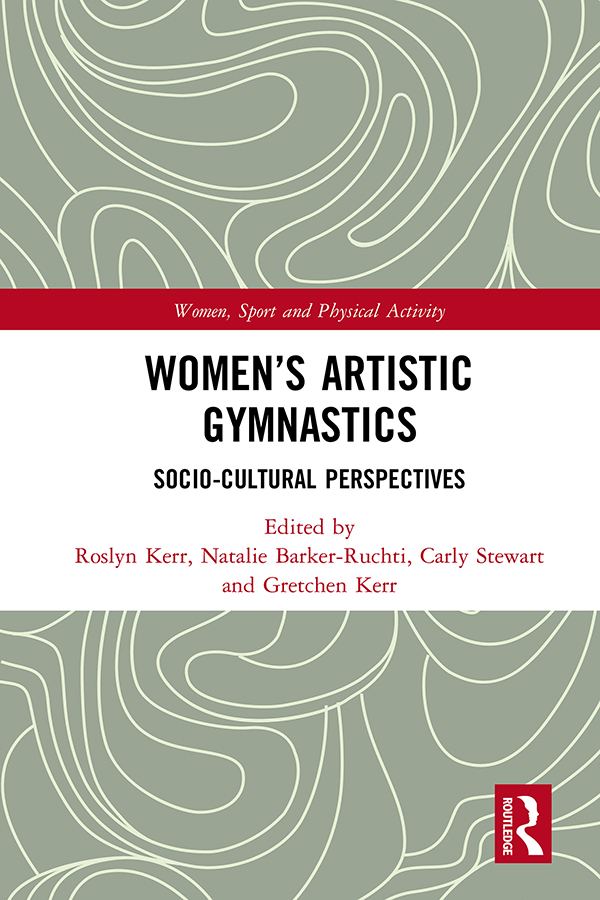
Edited by Roslyn Kerr, Natalie Barker-Ruchti, Carly Stewart, and Gretchen Kerr.
This book lifts the lid on the high pressured, complex world of women’s artistic gymnastics. By adopting a socio-cultural lens incorporating historical, sociological and psychological perspectives, it takes the reader through the story and workings of women’s artistic gymnastics.
Beginning with its early history as a ‘feminine appropriate’ sport, the book follows the sport through its transition to a modern sports form. Including global cases and innovative narrative methods, it explores the way gymnasts have experienced its intense challenges, the complexities of the coach-athlete relationship, and how others involved in the sport, such as parents and medical personnel, have contributed to the reproduction of a highly demanding and potentially abusive sporting culture.
With the focus on a unique women’s sport, the book is an important read for researchers and students studying sport sociology, sport coaching, and physical education, but it is also a valuable resource for anyone interested in the development of sporting talent.
Professor Barker-Ruchti contends that coaches should plan for Gymnastics peak performance as adults, rather than trying to teach as much difficulty as possible when girls are small:
In this exclusive interview with ge , via video call, directly from Sangalhos, in Portugal, where she resumed training with the Brazilian team last week, Rebeca talks about the most relevant issues in this round: quarantine alone, the importance of the mother, the recovery from another surgery, daily racism, harassment in gymnastics, the Olympic classification and the desire to win a medal in Tokyo. …
I’ve come here before, for competitions, and the people are really nice, so it’s cool. This contact with the Portuguese is very limited, mainly because of the virus. Better for us athletes. Here I have a room to myself. And the area that we can all be together is just the open area. Nothing closed. The girls cannot come to my room, and I cannot go to their room. But we have already done tests and everyone is fine, everyone is negative, everyone is in good health, thank God. Everything is going well. …
Yes, I watched “Athlete A”. I also watched the documentary that talks only about Larry Nassar (“No Coração do Ouro”). That’s it, impactful, heavy. I thank God that I did not go through this. That my coaches since I was little and now with Chico (Francisco Porath Neto) have always respected me. He always respected my mother (Rosa Santos), my family. So, something like that, so tense and difficult and abusive, didn’t happen to me. …
Interview with Rebeca Andrade about training in Portugal, her current progress, all her surgeries, her friendship with Flávia, her thoughts on Athlete A and racism towards her family, her plans to return, Tokyo aspirations, and her mother's support. https://t.co/2xKQ8YFanu


 Gymnastics Coaching.com