NEW Men’s Gymnastics book – The Game of Gymnastics

Winston Powell is a former gymnast with a coaching focused YouTube channel.  

In this book he looks at MAG routine construction, deductions, and difficulty.    Strategy to maximize routine scores.  

Only available as an eBook here for £10.00

Click PLAY or watch it on YouTube.

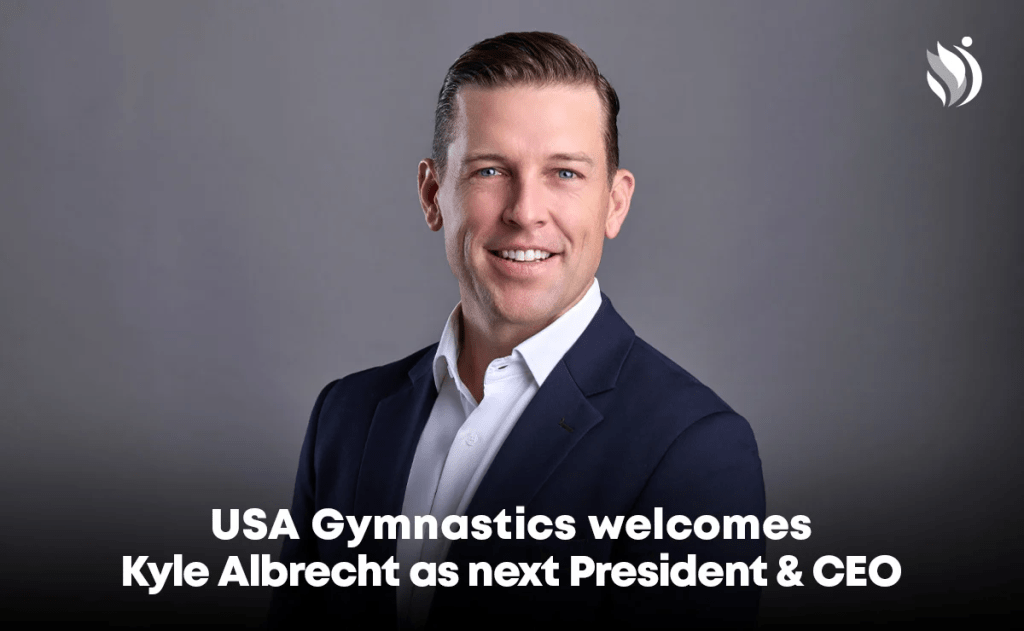
Kyle Albrecht named USA Gymnastics President and CEO

USA Gymnastics on Tuesday announced Kyle Albrecht as its next President and CEO. A national and international sports executive, he will begin his tenure January 1, 2026. …

Working with Major League Soccer since 2019, he was tapped in 2023 to be Vice President of MLS GO, where he has been responsible for the launch of MLS’s grassroots, youth participation platform.

Last November he was named General Manager of MLS NEXT, where he led the top youth soccer development program in America while delivering record growth.

USAG announcement

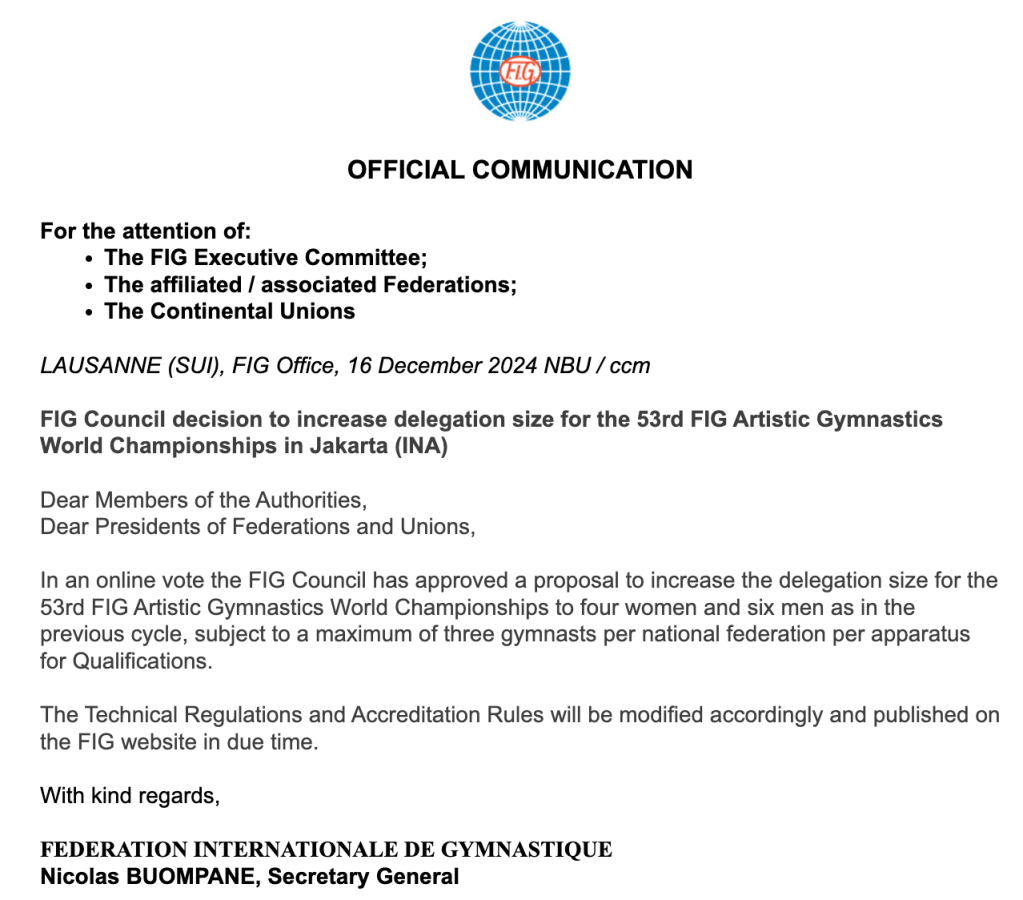
4 WAG, 6 MAG to Worlds 2025 Jakarta

Hardy Fink encouraged Federations to vote for a return to the system used 2005 to 2021.

And they did. Common sense has prevailed.

Credit FIG for realizing they’d made a terrible mistake in trying to reduce the number of competitors.

NOW … resume arguing WHY nations should send more men than women to the World Championships. 😀

NEW Gymnastics NZ Training Guidelines

New training guidelines issued by Gymnastics New Zealand for all ages and stages of a gymnast’s development will help ensure the sport is a safe, fun and healthy pursuit for all New Zealanders.

… created by a working group of club managers, coaches, athletes, parents and code representatives, Gymnastics NZ education staff, and a consultant from High Performance Sport New Zealand …

The guidelines suggest a range of training hours that strike a balance between developmental considerations, pathway priorities, and technical requirements. They are based upon considerations including: 

  • the fundamental requirements of gymnastics training sessions.
  • age considerations
  • athlete stages
  • our unique New Zealand setting
  • provision of choice
  • a targeted approach to keeping gymnasts in the sport as they reach adulthood and beyond 
  • the key principles of Sport NZ’s Balance is Better initiative.

Paris Olympics – Statistics

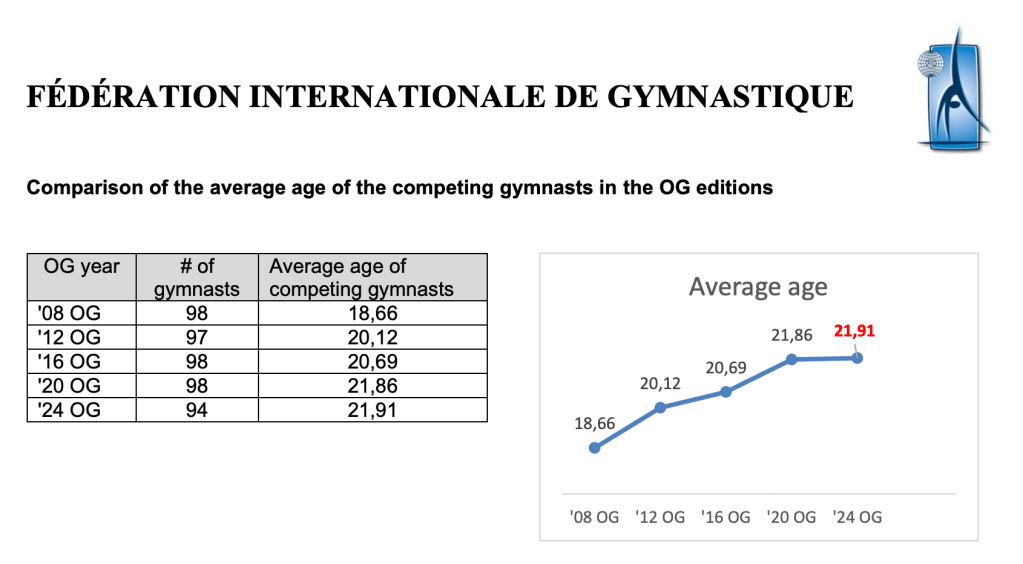
The December 2024 FIG Bulletin includes detailed reports on MAG & WAG Olympic competitions. It includes good graphics.

For example, only 25% of WAG competed 2 Vaults in the qualification round.

Average age for WAG was 21.91.

USAG’s future ‘training & wellness center’

USA Gymnastics is searching for a ‘campus‘.

I’m hoping this will get the offices out of Indianapolis. Ideally, the national sports governing body should relocate to a state government that better protects girls and women. For example, Indiana enacted a new total ban on abortion, which took effect on August 1, 2023.

Indiana does not have a law protecting LGBTQ people from discrimination.

In addition, a more central location geographically with better airline connections would be appreciated.

Heath Thorpe interview

Here’s a terrific PODCAST for every Gymnastics coach. Two of the most articulate pundits, both who truly know the sport inside out.

Sam Oldham, bronze medalist at the 2012 Summer Olympics.

Heath Thorpe, long time Aussie National team competitor, still training for L.A. 2028.

Heath will focus on H Bar. Compete other apparatus, as well, but likely not do the AA.

Click PLAY or watch it on YouTube.

graphing training Fitness & Form

Here’s an interesting visual look at a SAMPLE athlete’s peaking plan assessing Stress, Fatigue, Fitness, and Form. 

This from TrainingPeaks.com.

Click PLAY or watch it on YouTube.

Coaching for Performance in Life and in Sport

Coaching Association of Canada is circulating a “toolkit” for coaches who want to improve the success rate for their athletes.

It’s based on the dissertation of Erin Willson, PhD.

The full document is linked at the bottom of this post.

AI summary of the PDF:

The document provides a toolkit for coaches to create positive sport environments that foster both performance success and athlete well-being.

It outlines four key attributes of a positive sport environment: characteristics of the athlete, characteristics of the coach, characteristics of the coach-athlete relationship, and characteristics of the training environment.

The toolkit encourages coaches to expand their definition of success beyond just medal performance to include personal development, well-being, enjoyment, and a desire to stay in sport.

It provides guidance on assessing readiness for change, implementing positive coaching strategies like being empowering, healthy, and maintaining respectful coach-athlete relationships.

The toolkit also includes resources like checklists and planning guides to help coaches integrate these strategies.