worldwide coaching culture in Gymnastics

The International Gymnastics Federation (FIG) has been urged to hold a worldwide symposium “as soon as possible” to address the coaching culture within the sport in the wake of several abuse scandals.

In an open letter to the FIG, the Royal Dutch Gymnastics Federation (KNGU) expressed concern the culture portrayed in the Netflix documentary Athlete A is “not isolated but constitutes a risk for the entire world of gymnastics around the globe”. …

FIG urged to hold worldwide symposium to address coaching culture in gymnastics

the hydration fad

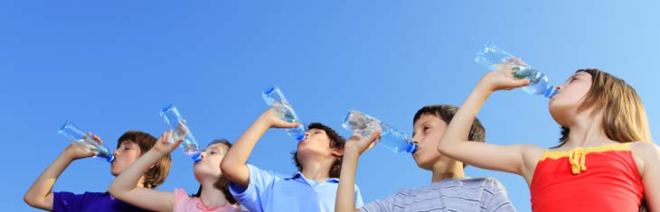
You know people who don’t go anywhere without their water bottle. They’ve become habituated.
hydration

It’s a fad. You should drink when thirsty. Benefits of hydration have been grossly exaggerated. That’s my opinion.

 Leave a comment if you feel differently.

Hyperhydration, rather than dehydration, may pose a greater health risk to athletes, according to two articles in a British medical journal. …

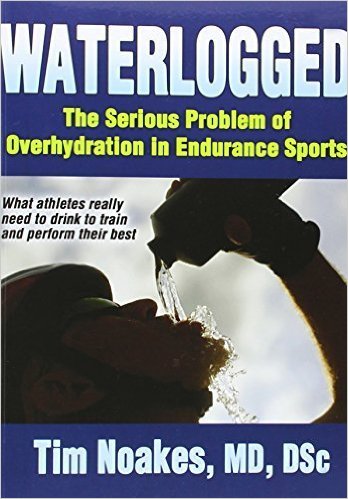
Misperceptions about dehydration have been driven in large part by marketing of sports drinks, according to Noakes, author of Waterlogged: The Serious Problem of Overhydration in Endurance Sports.

“Over the past 40 years humans have been misled … to believe that they need to drink to stay ‘ahead of thirst’ to be optimally hydrated,” he wrote. …

Too Much Water Bigger Threat Than Too Little
Waterlogged

The most recent (1996) drinking guidelines of the American College of Sports Medicine (ACSM) propose that athletes should drink “as much as tolerable” during exercise.

Since some individuals can tolerate rates of free water ingestion that exceed their rates of free water loss during exercise, this advice has caused some to overdrink leading to water retention, weight gain and, in a few, death from exercise-associated hyponatraemic encephalopathy.

The new drinking guidelines of the International Olympic Committee (IOC), recently re-published in this Journal, continue to argue that athletes must drink enough to replace all their weight lost during exercise and to ingest sodium chloride since sodium is “the electrolyte most critical to performance and health”.

In this rebuttal to that Consensus Document, I argue that these new guidelines, like their predecessors, lack an adequate, scientifically proven evidence base. Nor have they been properly evaluated in appropriately controlled, randomized, prospective clinical trials.

Abstract – Drinking guidelines for exercise: What evidence is there that athletes should drink “as much as tolerable”, “to replace the weight lost during exercise” or “ad libitum”?
Dutch coach Gerrit Beltman admits abuse

This article is in Dutch.

I used Google Translate.

Beltman (64), still active as a coach … :

“The behavior I showed is in no way justifiable. I insisted on winning, at the expense of everything …

I am deeply ashamed now. Never have I consciously intended to hit, to curse, to hurt or to belittle. But it did happen….

… thought it was the only way to cultivate a top sport mentality. I blame myself for failing.” …

Gym coach Gerrit Beltman breaks silent about his inhumane training methods: ‘I mistreated and humiliated young gymnasts to win medals. I am deeply ashamed’

Recall that former Dutch gymnasts Stasja Köhler and Simone Heitinga wrote a book detailing the abusive training methods they endured as elite gymnasts. The coaches accused were Gerrit Beltman and Frank Louter.

The Dutch Federation responded but did not apologize, perhaps on the advice of lawyers:

We continue to call on all athletes of all levels to report to the Center for Safe Sports and / or the Institute of Sports Justice (ISR) if they have experienced undesirable behavior, both now and in the past. …

The Dutch Federation has also launched an independent investigation focusing on top athletes from the age of 12 who were active from 2013.

Beltman coached in Belgium and Canada, as well as Netherlands.

YOG Dakar delayed to 2026

SENEGAL AND THE INTERNATIONAL OLYMPIC COMMITTEE (IOC) HAVE MUTUALLY AGREED TO POSTPONE THE YOUTH OLYMPIC GAMES (YOG) DAKAR 2022 TO 2026.

The IOC and Senegal understand that this news will be disappointing for many young athletes. …

Khorkina / Russia in denial

My best guess is that of all nations in the world the gymnasts who suffered most were from the Soviet Union / Russia.

Most of what Khorkina says should be studiously ignored.

Prominent figures in the sport like Nellie Kim, Liubou Charkashyna, Liudmila Tourishcheva, Andrei Rodionenko, and Ksenia Semenova claimed in separate interviews that gymnasts are coming forward because they want attention or money and this is likely to discourage victims of abuse from coming forward. …

KHORKINA ON GYMNASTS SPEAKING OUT AGAINST ABUSE: THE JUST WANT FAME

Australian gymnasts speak up about past abuse

Click through to read the article on The Age.

https://twitter.com/ozgymblog/status/1285860440229048320

recommendations after watching Athlete A

Enya Tierney reflects on Netflix’s Athlete A documentary.

Some recommendations for coaches:

  • Most coaches were once a gymnast, treat your athletes the way you would have liked to be treated when you were one of them.

  • Just because when you were a gymnast, your coaches were too strict or abusive towards you, it does not mean it’s the only way you can coach. Remember that you can break the chain!

  • Positive reinforcement is the most effective and civilised coaching method.

  • Listening to your gymnasts is part of your job, make them feel you are on their side!

  • If they complain about pains and physical restrictions don’t assume they are exaggerating. Listen to them, adapt your session plans to their needs, and be in touch with parents and doctors to find out what’s best for your athlete.

  • Make your feedback useful. We have advice on how to give good feedback on our Gym etiquette: three simple things to do at gymnastics training.

  • Your job is not only to make good athletes. It’s also about their personal and physical development, protecting their best interest, and giving them a safe and fear-free environment to practice. …

WHAT’S WRONG WITH RG COACHING? REFLECTIONS ON NETFLIX’S ATHLETE A

Danell Leyva – wind sprints

Working on routine endurance.

I also like these fast side-to-side stop / starts for knee and ankle injury prevention.

Click PLAY or watch it on Facebook.

Simone’s first week at the Ranch

It was 2011, when Simone was 13.

Aimee Boorman: When Simone became a Level 10 [the highest level before elite], we started talking about her becoming an elite. But when we first submitted videos to get her into [USA Gymnastics] developmental camp, the national team staff declined our request. We were told, no, she’s not ready, even though she had all of these skills, because her uneven bars skills were too weak. So when we did get an invitation to camp, we were very excited and we tried to showcase what Simone was good at.

Nellie Biles: I thought attending this first camp was the turning point for Simone in her career, so I was very excited.

Boorman: Simone was praised by the [national team] coaches about what a great job she had done. Then Martha just railed at her, said she wasn’t working hard enough and that she wasn’t good enough. Simone was devastated …

Boorman: The next camp was only three weeks away, so I talked to Simone and her parents. I never made any decisions without involving her and her parents. I think if she had the same experience at that next developmental camp with Martha, it would have broken her. It may not have taken her love out of gymnastics, but it would’ve made her not want to go back to the Ranch. We decided to decline the next camp. When we did, we weren’t invited back [by Martha] for more than a year. …

How Simone Biles found her voice and changed gymnastics culture