Tom Forster talks about training strategy at Jr Worlds.
ALSO, the American coaches made signs supporting their athletes.
tumbling, tramp, diving, acrobatics, circus, cheer, dance, martial arts, X sports … and more
Tom Forster talks about training strategy at Jr Worlds.
ALSO, the American coaches made signs supporting their athletes.
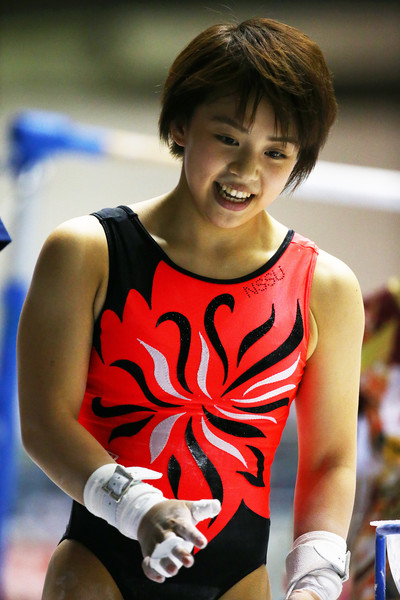
Japanese Women’s Team to Worlds:
・Asuka Teramoto
・Nagi Kajita
・Aiko Sugihara
・Hitomi Hatakeda
・Akari Matsumura
Japan has not yet qualified a full team to the Tokyo Olympics. Now they must do so without Mai Murakami, the Worlds #2 from 2018.
Worrisome. 😕
Meanwhile, it’s Olympic Day.
 How much of a contingency fund does your organization have on hand?
Could your Club pay for a lawsuit?
Tony Retrosi has advice:
 It All Starts With a Vision
Communicating Your Culture
Leadership
It’s Your Ship
Be Accountable
Develop ‘Buy In’
Be a Role Model
Encourage Diversity
Remove Toxicity
Avoid the 3 C’s
Click through for details:
Mai Murakami is the 2017 World Champion on floor exercise, the 2018 World all-around silver medalist, and a three-time Japanese national all-around champion (2016–2018).
Leaving her off the Worlds team is like leaving Kawhi Leonard off your basketball team. A disaster.
Mai did not qualify to Worlds through the official system. And it sounds like she will not be given any kind of petition to TRY for the team.
Poor planning on the part of the Japanese Federation.
The Rule of Two states that there will always be two NCCP (certified) coaches with an athlete, especially a minor athlete, when in a potentially vulnerable situation.
This means that any one-on-one interaction between a coach and an athlete must take place within earshot and view of the second coach, with the exception of medical emergencies.
One of the coaches must also be of the same gender as the athlete. Should there be a circumstance where a second NCCP coach is not available, a volunteer, parent, or adult can be recruited. …
Vulnerable situations can include closed door meetings, travel, and training environments amongst others. …

… To tend towards gender equality, the FIG decided to introduce a minimum 30% quota of each gender in the 2020 electoral process for its own governing bodies. …
Jacqueline Briggs-Weatherill, president of the FIG Women in Gymnastics Commission:
“We can see so many women as athletes, coaches and judges in Gymnastics, so their number could naturally grow in leadership and executive positions. The world is changing fast. The opportunities will be there for millennial women, so we need to help them step up.”
I see many Gyms with conditioning lists filled with general physical preparation.
Kids quickly adapt to the load and advancement soon flatlines. Many of our programs result in maintenance, not improvement.
Nick Ruddock consults with many Gyms around the world. One of the first things he looks at is their conditioning programs.
Nick recommends 25-33% of your total training volume to be spent on physical preparation related activities. Bill Sands would say you could spend as little as 30 minutes / day if the program is individualized, correctly targeted and efficiently done.
Click over for the details:
 Coach BRETT WARGO has some good ideas here. He want to encourage more gymnasts to stay longer in the sport as specialists, for example. As they do in NCAA.
His proposals should reduce the number of injuries, too.
Click through to read Brett’s recommendations.
Christie Aschwanden has a new book that’s getting a lot of attention, especially from coaches of endurance athletes.
The main takeaway for me was improving quality and quantity of sleep had the best potential for feeling more READY for the next training.
In one study a group of athletes spent 10 hours / night in bed, whether or not they were sleeping the whole time.
She found that many of the commercial products on the market had negligible effects on recovery. Often the placebo had the same result as the supposed recovery aid.
Recovery is very individual. And complicated.
She found that ice baths can “work” in that they make many athletes feel better (later), even if you’re not actually changing anything in the body.
Personally, I find the best strategy for the coach is to do an assessment of readiness to train at the beginning of workout, and adjust the plan based on that assessment. On a GOOD DAY do more. On a BAD DAY do more basics, less impact.
One season I had the girls do one rope climb during the warm-up reporting back to me how it felt. That was a good indicator, I found. We changed the load (e.g. tumbling reps) based on how they were feeling that day.
Amazon – Good to Go: What the Athlete in All of Us Can Learn from the Strange Science of Recovery
Christie Aschwanden is an award-winning science journalist.
She was the lead science writer at FiveThirtyEight for many years and is a former health columnist for the Washington Post. …
She was a high school state champion in the 1,600-meter run, a national collegiate cycling champion, and an elite cross-country skier with Team Rossignol. She lives and occasionally still races in western Colorado.

