Dvora Meyers put together a deep dive into the history of competition Gymnastics landings. She digs into the evolution of landing mats, as well.
The most dangerous part of most routines.
If gymnasts are allowed a controlled lunge on Floor, use that technique. It’s much safer — absorbing force over more time and distance.
Personally, my strategy as a coach is to train competition landings with the goal of a 0.1 deduction small hop. If the gymnasts happens to STICK for no deduction once-in-a-while, I consider it a 0.1 bonus over the plan.
… Teaching our athletes to land correctly is one thing coaches can control in terms of injury prevention, whether it be to lessen the load on tendons and ligaments to prevent overuse injuries, or to minimize the risk of fluke injuries …
… the force upon landing be dissipated throughout as much of the body as much as possible …
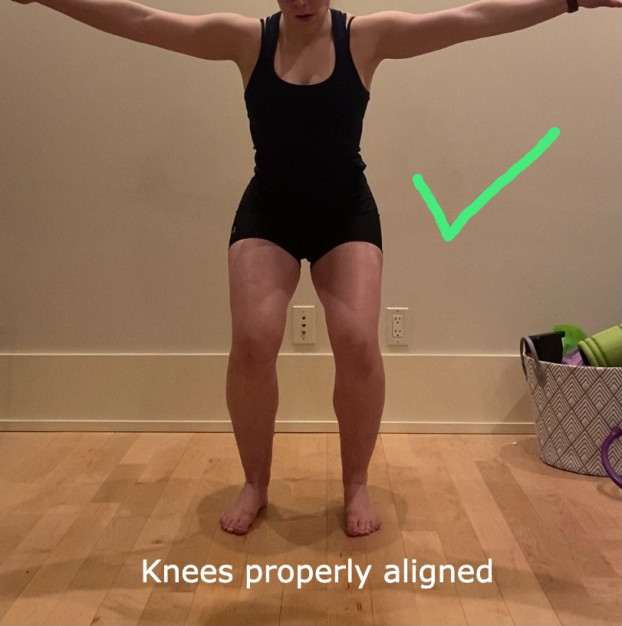
… feet around shoulder width apart, which widens the base of support over which force is exerted. Knees should be in flexion (bent), tracking over the toes …
Yes. Part of the problem in WAG is judging expectations. We need to educate judges to the biomechanically, physiologically BEST and SAFEST techniques of landing.



 Gymnastics Coaching.com