The Pride House is designed to be a welcoming and inclusive space and will be in operation throughout the period of next year’s Olympic and Paralympic Games.
… gender equality, diversity and equal opportunities …
Pride House has been launched alongside the Fair-Play Association, which aims to promote fair play, inclusion, equality and respect for people in sport regardless of gender, sexual orientation, expression or gender identity. …
Olympic ideals. Racists and homophobes should stay away.
GB feels they don’t have the resources to do the kind of job they want to do keeping everyone in the sport safer.
That’s not to mention the backlog of historic complaints that still need be evaluated.
Today our Chair – Mike Darcey – has called for the establishment of an independent safeguarding body to ensure athlete welfare across all sports. Read more here ▶️ https://t.co/l5aprxyaSj
— British Gymnastics (@BritGymnastics) May 16, 2023
I don’t want Russian gymnasts competing in the Paris Olympics.
YES it’s rotten for Russian athletes who don’t support Putin’s war, if there are any.
But banning Russia totally is the least bad scenario for 2024.
FIG President Morinari Watanabe echoed the IOC position that Russians should be allowed to compete as independents, as they did in Tokyo. I disagree.
If any Russians compete in Paris all headlines will be about that controversial decision, degrading the actually Olympic ideals for the nations of the world that did not invade their neighbours.
AND it looks like FIG will continue to delay a final decision until it’s too late for them to be included.
Nanci Moore, a gymnastics coach at Bay Valley Academy in Michigan, was suspended for allegations of mistreatment, being forced to compete through injuries, and not following concussion protocols.
Initially, she was suspended by SafeSport. But that 2 year suspension has been lifted. Nanci can coach under supervision.
It’s critical to take every accusation of misconduct seriously. And just as critical to welcome back those coaches found not guilty.
“Talk to your kids about good touch and bad touch and make sure they feel comfortable coming to you if something doesn’t feel right,” she said. “Regularly check in with your kids: Ask them what was good and what was bad about practice and if anything made them feel uncomfortable.” …
… “The highest risk areas are those that allow for one-on-one adult-child interaction, often at the elite level. Those activities that involve body positioning, such as swimming or gymnastics, exacerbate the risk because touching is a part of the training.” …
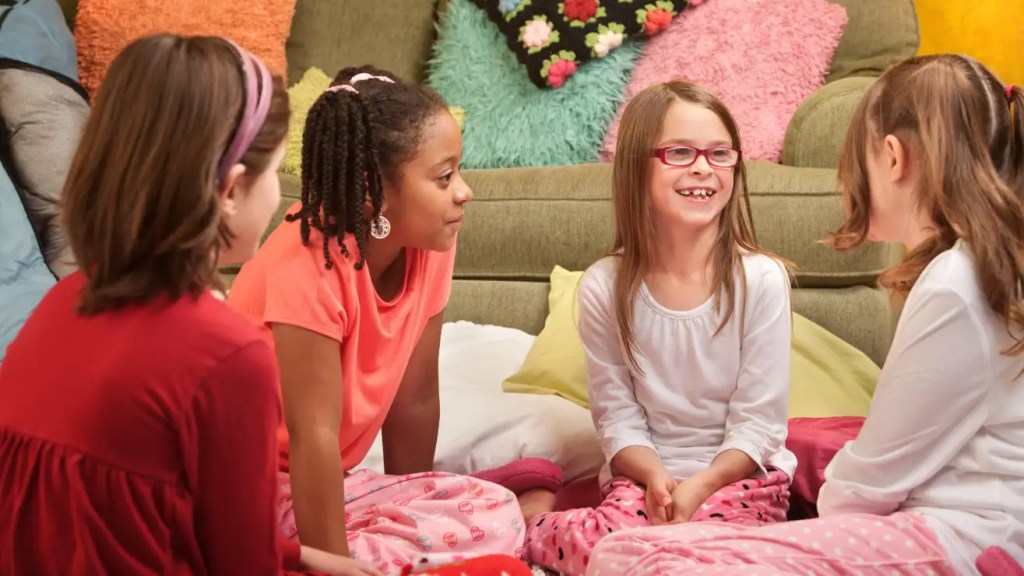
When I was a kid, we had Gym sleepovers at my club. Other clubs. And frequently billeted with the families of other gymnasts when away at training camps.
Not to mention the frequent sleepovers I hosted with my own friends.
But in 2023 there are not many unsupervised sleepovers. Good policy.
In recent online and media debates about sleepovers, parents have cited big concerns about letting their children sleep at a friend’s house:
How much adult supervision will they have?
Are there guns in the home?
Is the family COVID vaccinated?
Are alcohol and drugs sufficiently secure?
Will other parents take my child’s allergies/health condition seriously?
Will the kids have access to the internet?
What other siblings, friends, and adults will be in the home, and do I know them?
How do I know my child will be safe from abuse?
Who even are these people?
… There are alternatives to the traditional sleepover where young kids can get some of the freedom and novelty without as much risk:
Allowing sleepovers with trusted family members or family friends.
A “sleep-under” (or half-over or late-over): Allowing your child to play late at a friend’s house but come home for bedtime.
Let them go on daytime outings with friends and their families where you can be present and get to know everyone better.
Go camping with other families, which gives the kids a sleepover experience but all parents are present for supervision.
The Division I Board of Directors on Wednesday unanimously adopted new rules for all Division I schools that will require increased support for college athletes. …
All Division I members who do not do so already will be required to:
Provide medical coverage for athletically related injuries for at least two years after graduation.
Cover out-of-pocket medical expenses (copayments, deductibles, etc.) during a student-athlete’s playing career.
Attest that they provide mental health services and support consistent with the NCAA’s mental health best practices.
Offer degree completion funds for up to 10 years after a college athlete’s eligibility concludes, if that college athlete was previously on full scholarship or received financial aid in a head count sport.
Provide the same scholarship protections already required of autonomy conferences.
Attest that they provide academic support services in line with NCAA rules.
Attest that they provide career counseling for current and former college athletes and life skills development across a range of topics, including at minimum:

 Gymnastics Coaching.com