The goal is to keep the centre of mass as far away from the Bar (axis of rotation) on the down swing as possible.
Click PLAY or watch it on YouTube.

tumbling, tramp, diving, acrobatics, circus, cheer, dance, martial arts, X sports … and more
The goal is to keep the centre of mass as far away from the Bar (axis of rotation) on the down swing as possible.
Click PLAY or watch it on YouTube.
Click PLAY or watch it on YouTube.
This is one of the best Handspring forward salto half vaults I’ve ever seen
Click PLAY or watch it on Twitter.
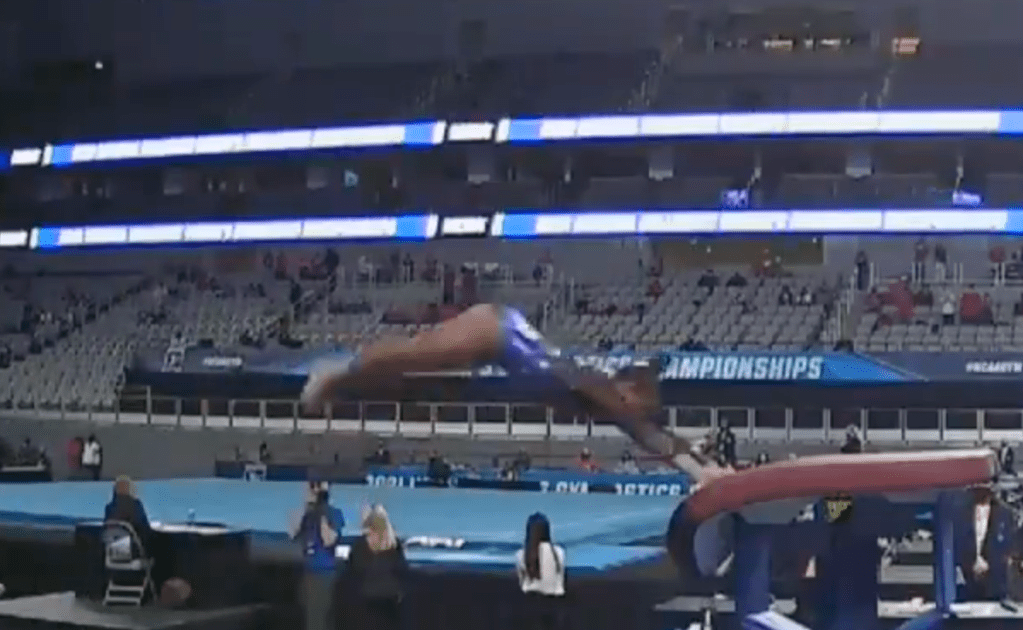
Not the most common technique, Haleigh uses what my mentor Boris called “Flyspring” technique. First contact on the table with hips piked. She OPENS her hips while in contact to increase reaction force.
This technique works best for very fast, very powerful gymnasts. They tend to take off closer to the back of the Board and contact the front of the Table. GOAL = get the hands on the table as quickly as possible.
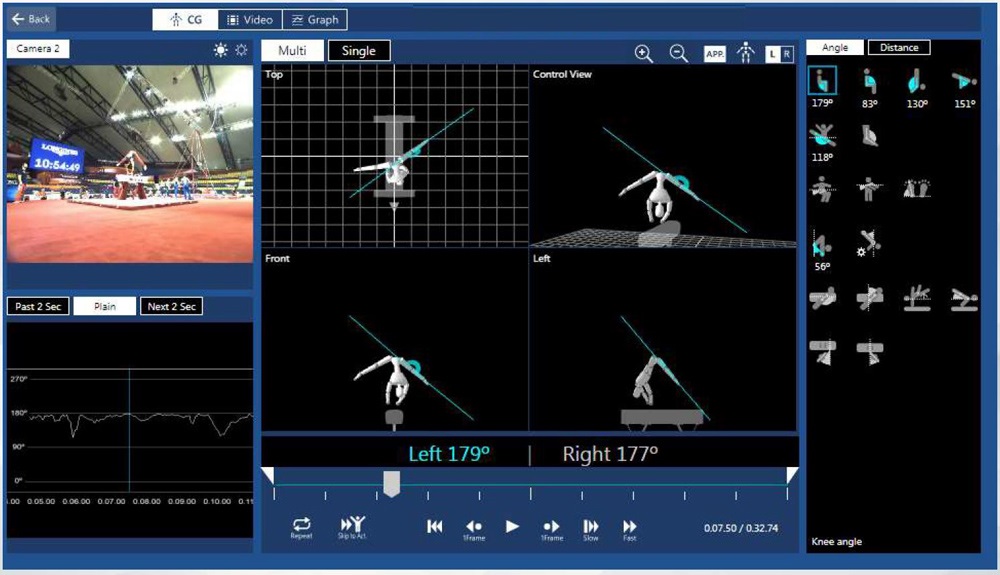
Chow’s Gymnastics and a few other Clubs are piloting this software already.
Details on the new app here.
Click PLAY or watch a sample on Vimeo.
I have no idea what these amazing athletes are doing.
How do they even keep track of so many multiple rotations?
And who wants to land backwards at full speed?
Click PLAY or watch it on YouTube.
Seems to me Omega is ahead of Fujitsu in technology.
One of the best vaults of the season, so far.
A good example of how video analysis rewarding height, distance and early completion of the twist would be more accurate than human judges.
Click PLAY or watch it on Twitter.
Real life, real time it can be challenging to analyze complex twisting skills.
In FB CURVES you can slow them down and watch from different angles.
Click PLAY or watch it on YouTube.
I feel progress has been slow.
I can’t foresee it happening any time soon.
Watanabe, who retained his position as FIG President at last month’s Congress, stresses that the technology is currently assisting judges but did not rule out the idea of it eventually becoming sole arbiter.
“At this stage, it is a judging support system,” Watanabe told insidethegames.
“It may be a substitute for humans in the future. …
Exclusive: FIG President Watanabe says computers may eventually replace judges
 Gymnastics Coaching.com