Denis Vachon was one of Emma’s coaches for 10 years. He reflects back as she retires from College Gymnastics.
Category: psychology
Shallon Olsen on Mental Health
Shallon is amazing. She juggled an NCAA career simultaneously with Elite, competing 3 Olympics. (so far)
One of the most amazing young gymnasts I’ve even seen, Shallon could do Yurchenko Double Twist at age-8. Tiny … she could barely deflect the FIG Spring Board.
Her age group training was with strict Russian coaches.
Looking back, Shallon wishes she had been listened to more. And supported better.
Click PLAY or watch it on Instagram.
Now age-24, Shallon’s still competitive in Elite. And is considering a run at her 4th Olympics.
Shane Wiskus – Documentary
Shane Wiskus represented the United States at the 2020 Summer Olympics and was named as an alternative for the 2024 Summer Olympics. Additionally, he represented the United States at the 2019 World Championships and is a three-time NCAA Champion. …
The Documentary on YouTube is titled Losing Grip – Shane Wiskus Full Documentary.
It was put together by one of Shane’s former teammates, Steven Nye.
The title references that astonishing SAVE Shane made on H Bar, swinging out of Cassina on 1-arm. (VIDEO)
Also interesting for coaches, is how Shane grips-up for H Bar. (VIDEO)
Click PLAY or watch it on YouTube. (1 hour)
Brooklyn Moors – Strong & Beautiful
Is there anyone left who STILL thinks that athletic women can’t be beautiful?
How dumb could they be? 😀
Click PLAY or watch it on YouTube.
Katelyn Trevino – confidence on Beam
Click PLAY or watch it on YouTube.
How to Save Youth Sports: A Manifesto
Parents in 2025 are worried about peer pressure, teen mental health, teen addiction to screens, and even childhood obesity.
As coaches, our goal is that kids get hooked on fitness and achievement through sport. Being an athlete is one of the best ways to grow up.
Here’s a terrific article by Steve Magness for your parents:
How to Save Youth Sports: A Manifesto
Sports are a great way to establish basic psychological needs: autonomy; mastery and skill development; mattering and belonging
Nobody remembers (or cares) if you won your first-grade league championship.
Youth sports should be about having a space for kids to challenge themselves healthily and explore their interests and limits.
Youth sports should be a place where kids can learn how to be a good teammate, navigate conflict, and develop tools to regulate their emotions.
Perhaps most of all, youth sports should be about developing a positive relationship with physical health and fitness. …

LOVE IT – Nike Superbowl Ad feat. Jordan Chiles
training Layout Jaeger in a belt
Personally, I’m not a big fan of using a belt for same Bar releases.
It works — but can make it difficult for some gymnasts to get OUT of the belt.
That said, IF you use a belt, do as few repetitions in it as possible.
Click PLAY or watch it on YouTube.
Beacon is BACK
improving brain – body connection
You know that kid?
A motor genius?
They can quickly understand a movement challenge and accomplish it quickly.
HOW that works is little understood by coaches.
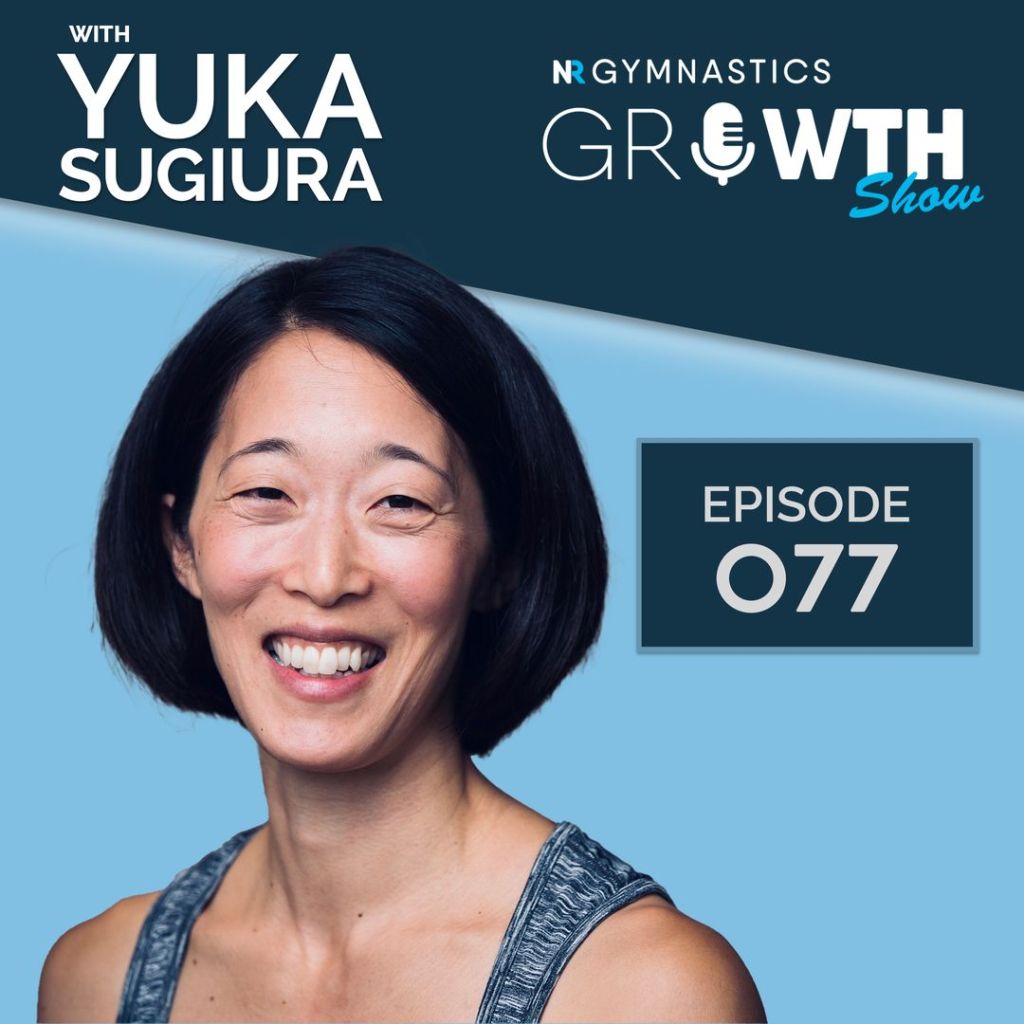
Yuka Sugiura consults with gymnasts & coaches, explaining the vestibular system. And uses a few quick, easy drills to improve the brain body connection.
To learn more, listen to the podcast. Google: “EP077 Gymnastics Growth Show – Nick Ruddock and Yuka Sugiura“