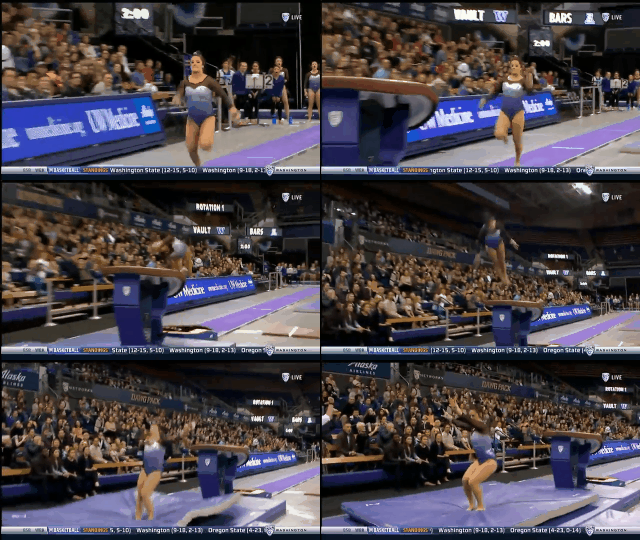
Spencer posted the list of highest value vaults:
Click through for details included scoring changes for the coming season.
WTF IS NCAA SCORING – VAULT (2020 UPDATE)
I’d say Tsukahara with 1/2 twist is the easiest on the list.
tumbling, tramp, diving, acrobatics, circus, cheer, dance, martial arts, X sports … and more
Spencer posted the list of highest value vaults:
Click through for details included scoring changes for the coming season.
I’d say Tsukahara with 1/2 twist is the easiest on the list.
Check them out via Twitter.
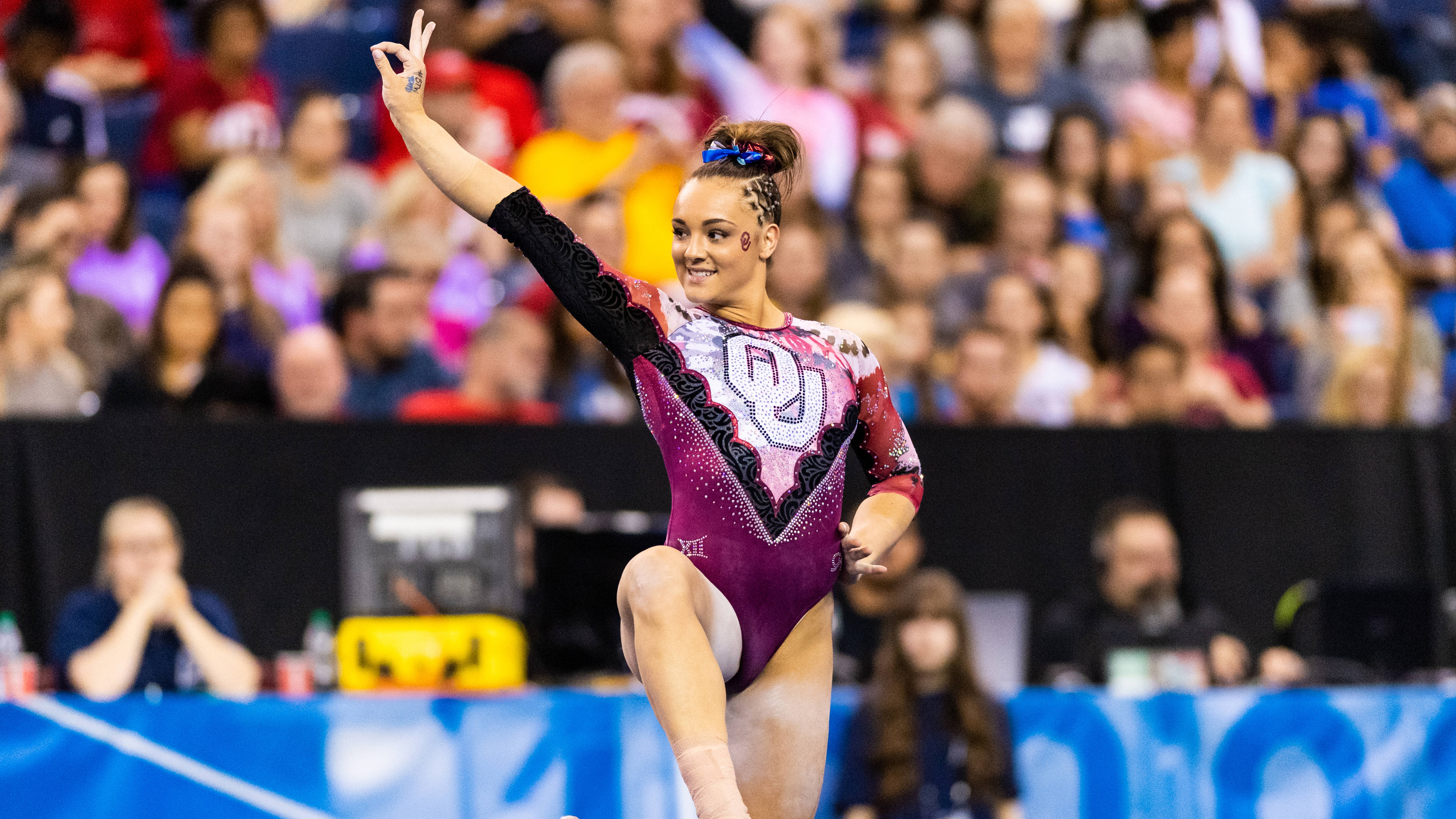
Seniors Kyla Ross and Maggie Nichols currently sit in sixth and seventh place respectively, with Ross nine 10.0s away from tying the record. She recorded fourteen 10.0s during the 2019 season. …
1 Jenny Hansen (Kentucky) 28
2 Jamie Dantzscher (UCLA) 27
3 Hope Spivey (Georgia) 24
4 Kim Arnold (Georgia) 21
5 Karin Lichey (Georgia) 20
6 Kyla Ross (UCLA) 19
7 Maggie Nichols (Oklahoma) 17
Right. judging has NOT been consistent over the decades. We are living in one of the highest scoring eras.
Dumb. Until we have computer video analysis to make this kind of call, it would be better to call all straight body layouts D-parts, and take deduction from the E-score.
Under current rules, I don’t trust human beings to make the right call every time.
Click PLAY or watch it on Twitter.
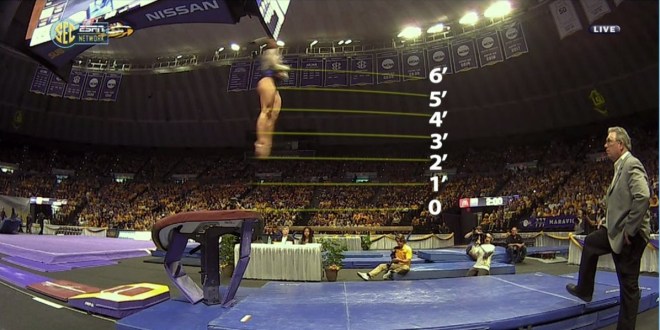
It’s great for the fans. And it COULD be good information for the judges.
Here’s some of what ESPN uses.
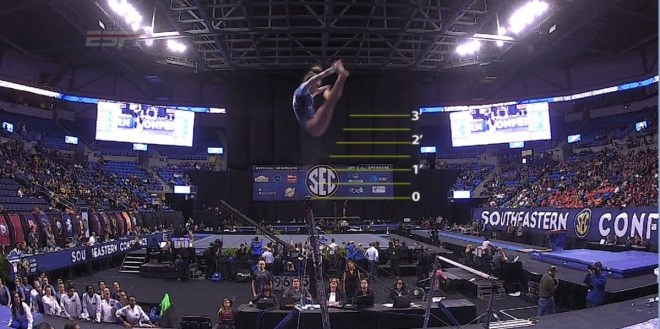

Click PLAY or watch it on YouTube.
If you want young gymnasts to keep form during their routines, stretch and condition the specific muscles needed.
Click PLAY or watch it on YouTube.
Check this out.
Yazaira Cabrera-Dávila, the women’s technical director for the Puerto Rico Gymnastics Federation (FPG), is also a judge.
Dvora Meyers posted a good interview:
DM: There was so much talk about the new Fujitsu judging system that was being tested in Stuttgart. Do you think gymnastics will ever fully move away from human judging or will we always need people to help determine rankings in the sport?
YCD: I like the idea of computers assisting with judging. There are components of the evaluation that would be more accurate with sensors; angles, height, precision of twisting; elbow, knee and foot extension.
I think that there should be a combination of both like they use in halfpipe snowboarding, for example.
On balance beam and floor exercise, the artistic presentation is something that I do not think a computer is able to evaluate, at least [not] right now.

Search for the free app (MAG or WAG) to see samples. From there you can decide whether to purchase the PAID version.
Click PLAY or watch it on Twitter.


