This is one of the better fan ‘explainers‘ I can recall.
Good selection of VIDEO examples.
tumbling, tramp, diving, acrobatics, circus, cheer, dance, martial arts, X sports … and more
This is one of the better fan ‘explainers‘ I can recall.
Good selection of VIDEO examples.
Top score in the modified rules 2023 CGA All-Stars meet.
Score: 9.700 (10.0 start value, 0.05 stick bonus)
Click PLAY or watch it on YouTube.
Top score in the modified rules 2023 CGA All-Stars meet.
Score: 9.675 (10.0 start value)
Click PLAY or watch it on YouTube.
Top score in the modified rules 2023 CGA All-Stars meet.
Score: 9.925 (10.0 start value)
Click PLAY or watch it on YouTube.
Top score in the modified rules 2023 CGA All-Stars meet.
Score: 9.725 (10.0 start value)
Click PLAY or watch it on YouTube.
Top score in the modified rules 2023 CGA All-Stars meet.
Score: 9.763 (10.0 start value)
Click PLAY or watch it on YouTube.
Top score in the modified rules 2023 CGA All-Stars meet.
Score: 9.700 (10.0 start value, 0.05 stick bonus)
Click PLAY or watch it on YouTube.
An excellent improvement on College rules. This will definitely help separate the best of the best routines.
Hopefully we’ll see NO MORE College Sticks getting a 10.0 score.
LANDING is a skill. And should be evaluated as a SKILL.
Click PLAY or watch it on YouTube.
For me SmartScoring has been the worst way to follow LIVE scores at a Gymnastics competition.
And it seems to fail. Regularly.
Some people like LiveMeet, which is what we use in Canada. Personally I find the interface unappealing and slow. It’s like a webpage from the 1990s.
Longines is pretty. But I’m often confused with the layout.
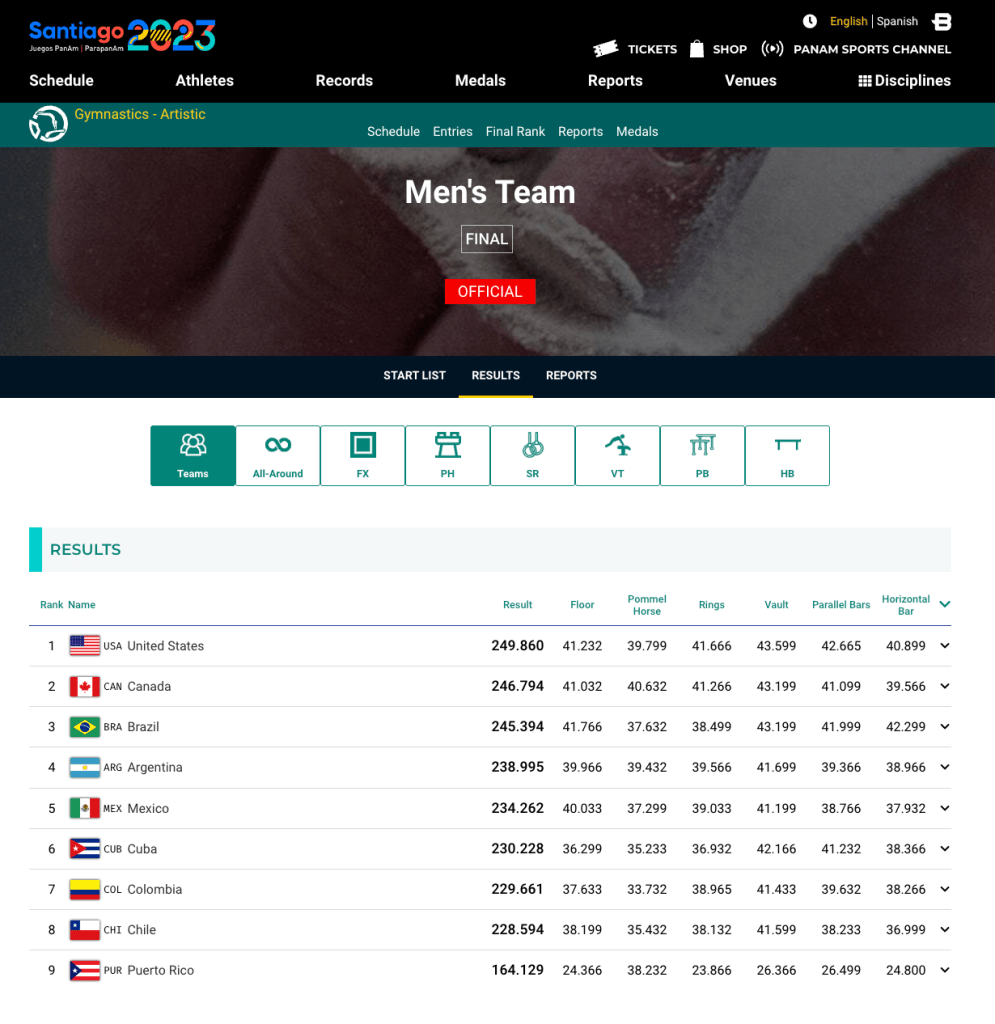
Rachael points out that the system used for the PanAm Championships is quite good. A very clear and intuitive interface than anyone can use instantly. And it includes a lot of data.
 Gymnastics Coaching.com