With honesty and candidness, Rachel shares how the sport she loved that gave her so much—friendships, accomplishments, a college education—is also tangled in a dangerously toxic culture that needs to be fixed. In a world that was setting her up for a lifetime of recovery, she tells how faith, family, and an army of survivors made healing possible.
Rachel’s story is not unique. Any gymnast will relate to her detailed accounts of training, competition and injury.
She loved Gym. Thrived in J.O. in Michigan.
In Level 9 she made Eastern Nationals. A huge accomplishment.
But two weeks before her next Eastern Nationals the Gym was sold. She and her coach needed to train so they went to Geddert’s Twistars, a 90 minute drive from her home.
That worked so she stayed at Twistars. It wasn’t long before she was sent to see Dr. Larry Nassar who volunteered at the Gym on Monday nights. The injury was a torn hamstring.
He treated it at the Gym in a small room used to store equipment. She was age-14 when Larry did the first ‘internal manipulation’.
Later she was abused at his MSU office and at his home. Over the next 6 years those internal treatments were continued regardless of the injury.
Rachael has many positive things to say about John Geddert. As well as her Beam coach, John’s wife Kathryn.
Despite increasingly serious injuries, she continued to be very successful in competition. She trusted the Gedderts. And trusted Larry Nassar, the only doctor who told her she could make a comeback after one back injury.
At her first Karolyi camp only one male was allowed in the gymnast cabins – Nassar.
When she went to visit the Minnesota Gymnastics team she was shocked at how different it was compared to Twistars.
Happy to be offered a scholarship, the Minnesota trainers were worried about Rachael’s back. She convinced them to talk to Nassar. And she continued to be treated by Nassar when she could.
Then one of her College coaches, Jim Stephenson, was charged by another gymnast with sexual harassment. He was suddenly gone but the Head Coach — his wife Meg Stephenson — stayed.
Rachael felt the Gopher team began to self-destruct. A few months later Meg quit. It was a bad season.
With two years left on her scholarship Nassar told Rachael to quit for medical reasons. She later realized he was already under investigation.
Rachael refused to quit. Decided to continue for a 3rd year competing only Beam and Vault. Miraculously Minnesota made Nationals in 2016. Another huge accomplishment for Rachael.
Rachael is an amazing competitor. Over her career, she kept finding some way to HIT despite multiple obstacles. Her story is shocking that way. I really admire her tenacity. And her honesty in writing this book.
Four months after her final Gymnastics competition the Nassar headlines hit the media. She told her Mom that she didn’t believe the allegations, worried that her mother would feel responsible for Rachael’s own abuse. At that point, she still believed in her doctor.
In 2017 she finally had the spinal fusion that had been put off for years.
Rachael agonized over joining the other Nassar victims. Especially in telling her parents. But in January 2018 both Mom and Dad attended the hearings with her. She was Survivor 195. Her victim statement was not released in court. But she does include it in the book.
If you still can’t fathom how Nassar got away with it for so long, read this book. In context with everything else that’s happening, it makes more sense. These young women truly believed that Larry had their best interest at heart. They all trusted him.
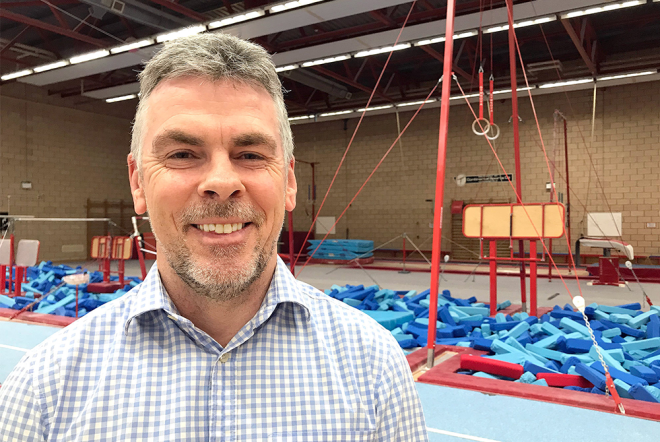
He’s a marketing guru with experience at Reebok and adidas. He’s been working for BG for 18 months.
Q. As someone coming in to gymnastics from the outside, what struck you immediately as being the big untapped opportunities within the sport?
A. … From the outside, I thought I could see that gymnastics seemed under-commercialised.
Q. Were there specific, unforseen barriers to how you commercialise the rights and properties?
A. The sport itself is – certainly was – very focussed on the organisational stuff: safeguarding and regulations and so on. Quite rightly so …
I saw [British Gymnastics] as a hidden gem. …
A. Tell us how you’re trying to shift the brand and the narrative…
The three main headlines …:
1) We have a participation boom, particularly among our core audience of 5-14s.
2) We’re medalling well at the high performance level; and
3) We have this high female bias – roughly 80% in our participation.
Q. What impact have you seen so far?
A. ‘Power to amaze’ is not an external strapline, but rather a brand essence. We’ll be starting to roll it out across our events this Spring.
It’s also informed our commercial proposition, which has three main threads.
One is around community. …
The second area for partnership is innovation. …
The third area … is that we have access to really engaging and interesting content in gymnastics.
From behind-the-scenes to clubs to gymnasts – there’s a whole thread. … Gymnastics already benchmarks really well against other sports on social media, particularly Facebook and YouTube. …
(He mentions Nile Wilson’s YouTube channel with 1m + subscribers.)
… But we know many gymnasts have their own platforms and audiences outside of British Gymnastics, and they’re free to pursue those commercial opportunities to supplement their funding.
Q. As a sport that enjoys a huge Olympic boom every four years, how does that cycle affect your planning?
A. One of the incongruous things is that our high performance success has mainly been driven from the men’s side, but our participation is driven from the female side. …
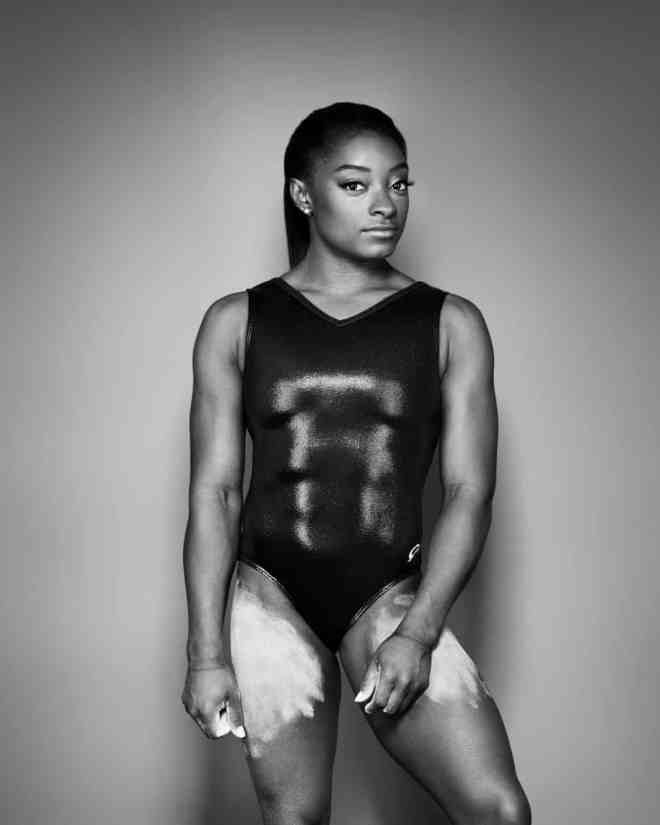
In advance of Simone’s appearance at the Superstars Of Gymnastics in London on 23 March, the Guardian newspaper posted an in-depth feature.
… At times, she seems younger than her years, a product of the almost religiously sheltered upbringing of the professional child athlete. At others, she sounds like a 45-year-old woman who should be running for political office. …
What has become apparent, in the last year, is Biles’ moral courage. As an athlete, she is talked of in the same breath as Serena Williams …
Like most professional athletes, she is incredibly hard on herself and competes less with others than with her own internal set of ideals. …
“Even when I win, there are still times when I’m upset. Like at Worlds, last year. It doesn’t mean, because you win, you’ll be happy.” Why? “I fell twice. Yes, I still won. But I didn’t put out my best performance.”
 Gymnastics Coaching.com