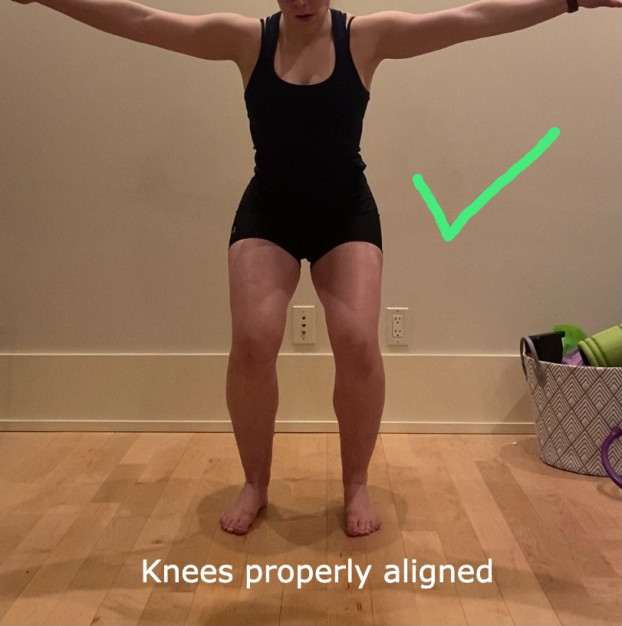
safest Gymnastics LANDINGS

Dave Tilley presented to both WAG NCAA College coaches and judges before the 2022 season.

The goal is for judges to evaluate landings consistently — and promote the safest possible landings.

The biggest reason is due to the massive number of serious knee and ankle injuries that gymnasts deal with, particularly in the NCAA. When you look at research studies, leg injuries account for up to 54.1% – 70.2% of all injuries.

Based on a study looking at injuries in NCAA Women’s gymnastics from 2009-2014, leg injuries accounted for 50% of all injuries with the knee and ankle being the most common (19). In some studies, up to 52% of all gymnastics injuries occur during landings, with some researchers calling it the ‘riskiest exercise phase in gymnastics.” …

THE NEED TO CHANGE LANDING DEDUCTIONS IN NCAA GYMNASTICS FOR LESS KNEE AND ANKLE INJURIES

Click through for a deep dive into this very important topic.
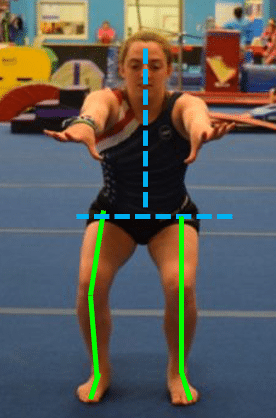
Watch William Emard STICKING.

Good aerial awareness. Stong legs. Good technique. Fewer injuries on landings.

Click PLAY or watch it on Instagram.
FB CURVES 3D GYM is awesome

The best graphics program available.

A subscription costs a few dollars a month.

Christmas is coming — just saying‘.

Click PLAY or watch it on YouTube.

revisiting Aly’s tumbling pass

The Olympic champ is still the only person ever to have competed this line.

Click PLAY or watch it on YouTube.

Click PLAY or watch it on YouTube.

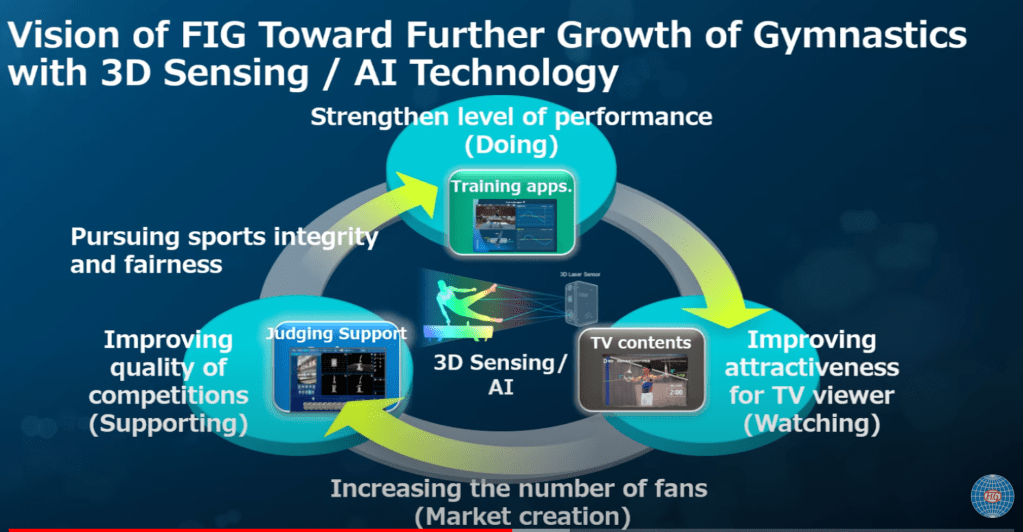
Fujitsu “Judging Support System”

Fujitsu will be working Worlds 2021, of course. Analyzing more routines for their database.

A webinar has been posted online:

FIG and Fujitsu to discuss AI “Judging Support System”

Watanabe speaks in English in the video. He’s really improved over the past few years.

He points out that other sports are using video analysis. Tennis and baseball, for example.

But judging support is only one goal of the project.

Steve Butcher details other uses.

Fujitsu expects all 10 Artistic apparatus to be ready for 2024. (Progress seems slow, to me.)

By end of 2022 the “Training Support System” should be ready. I’d love to have a chance to test that in the gym.


The very first use of computer video analysis should have been to display height and distance of a skill relative to the height of the athlete. Vault post flight, for example.

Fujitsu is doing a good job analyzing Ring strength holds, however. The system can do better than most FIG judges.

Personally, I’m disappointed in the graphics rendered by the software. It’s embarrassing that every representation has feet apart, for example.

I WISH Fujitsu could output something 1/10th as good as FB CURVES 3D GYM.

Click PLAY or watch it on YouTube.

Click PLAY or watch it on YouTube.

Biomechanics for coaches

FIG posted a presentation by world expert Gareth Irwin (GBR).

An overview of the benefits.

Click PLAY or watch it on YouTube. (1 hour)

on SAFER Landings

Click through for the longer post.

Emily Bischoff:

… Teaching our athletes to land correctly is one thing coaches can control in terms of injury prevention, whether it be to lessen the load on tendons and ligaments to prevent overuse injuries, or to minimize the risk of fluke injuries …

… the force upon landing be dissipated throughout as much of the body as much as possible …

… feet around shoulder width apart, which widens the base of support over which force is exerted. Knees should be in flexion (bent), tracking over the toes …

Promoting Safety in Gymnastics: Landings