1. There is a difference between discipline and punishment.
5. Don’t have too many rules
6. Let the stakeholders (read: the athletes) be involved in creating any necessary rules.
12. You are the adult.
Click through to read the rest.

tumbling, tramp, diving, acrobatics, circus, cheer, dance, martial arts, X sports … and more
1. There is a difference between discipline and punishment.
5. Don’t have too many rules
6. Let the stakeholders (read: the athletes) be involved in creating any necessary rules.
12. You are the adult.
Click through to read the rest.
Michiel de Hoog writes about sport for De Correspondent in Netherlands.
Though no Gymnastics expert, de Hoog put together a very damning article on the culture of elite women’s Gymnastics.
There are some specifics overstated. No examples at all of any elite gymnasts who feel they didn’t suffer child abuse. But his main point is hard to refute.
Best read it for yourself.
Women’s gymnastics has a decades-old, reform-resistant culture of abuse. It’s hard to see a solution when child abuse isn’t an exception in women’s gymnastics – it’s the logical consequence.
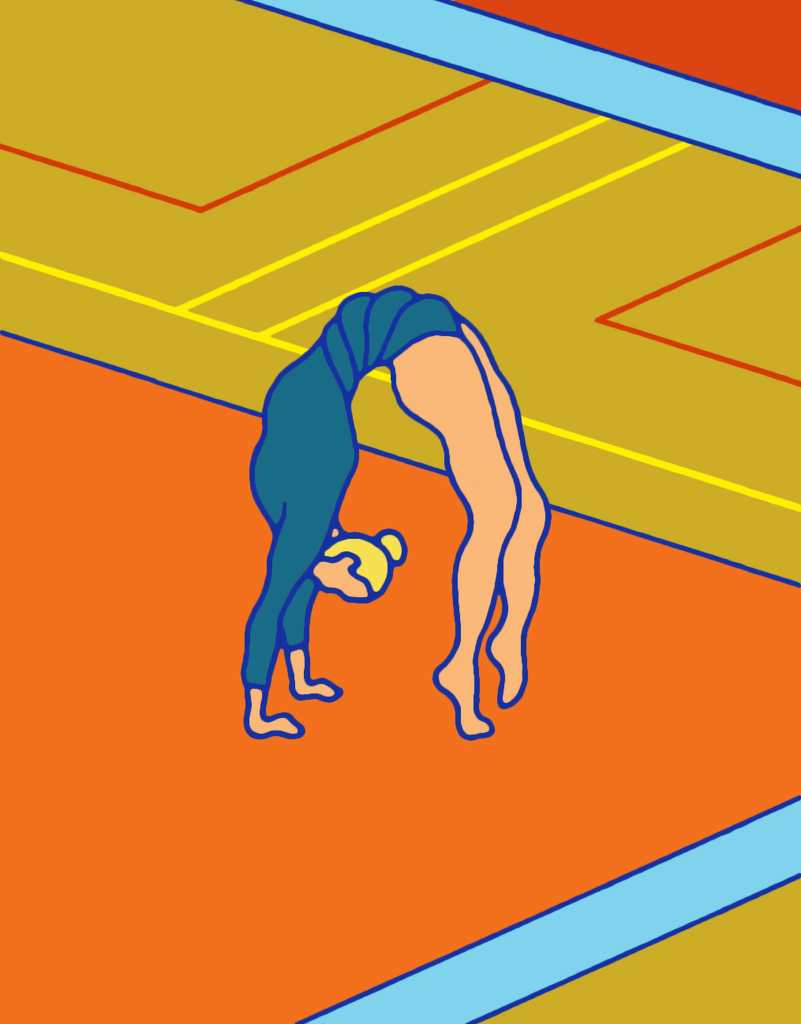
As a positive sports parent, I make these promises to my child(ren):
 I promise to listen to you if you have any concerns about your sport
I promise to learn how your club keeps you safe and what I can do to help
I promise to make sure that I set a good example and support you (and your teammates) in a positive way

This is the criminal doctor episode.
Kathy Johnson is always good. But it’s Dominique who’s most eloquent of many gymnasts interviewed.
Jordyn Wieber too. She recalls that the Ranch was closed the day after Simone said she didn’t want to go back to the place of all that sexual abuse.
Olga Korbut calls her former coach a monster.
In part five of our documentary series, survivors of abuse describe the culture that allowed a USA Gymnastics physician and many dozens of other coaches and officials to take advantage of athletes, and explain how they’re using their voices and the life skills that gymnastics taught them to reclaim their sport.
You MIGHT be able to watch Defying Gravity free weekly with ads — or watch all episodes uninterrupted with YouTube Premium.
Click PLAY or watch it on YouTube.
Alecia Ingram was a 4 year National Team member. (1995-96, 1996-97, 1997-98, 1998-99)
At various times she trained at Cypress under Deana Parish and Debbie Kaitschuck, at Dynamo, at Cincinnati Gymnastics Academy, with Don Peters at SCATS, and at Parkettes.
In College she competed for Nebraska and University of Florida, finishing in the autumn of 2003.
Alecia recounts a LOT of bad experiences in this sad, sad post.
Dvora posted an article for Vice:
The Gymnast Alliance is forcing a reckoning with abusive practices that have long been at the center of the sport.
… hundreds of gymnasts from all over would post their personal stories of pain and abuse to social media using the hashtag.
They spoke of being forced to train and compete on serious injuries; of being publicly shamed for their weight; of being screamed at and belittled for making mistakes in practice.
Press attention would soon follow, with reports on ITV and other outlets. And the #gymnastalliance would soon spread to other countries, with gymnasts in Belgium, New Zealand, Australia, and the Netherlands speaking up about abuse at the highest level of sports there.
Hotlines have been set up; independent inquiries have been promised; coaches have been suspended. …

Bars is the main theme of the second episode.
Beam will be featured in episode 3, but you need a YouTube Premium account to watch episodes 3-6.
In part 2 there’s a serious discussion of the psychological pressure on girls during puberty, as well. Kyla Ross talks about the growth spurt she had after her first Olympics.
The great Vanessa Atler talks about the distress she felt when her coaches started weighing her daily.
Steve Rybacki certainly comes off a jerk.
I went back to listen again to Vanessa’s 2017 interview on GymCastic. Vanessa has many good memories of her main coach, however. She’s forgiven a lot of people from her past.
Cathy Rigby talks about eating disorders, as well.
Click PLAY or watch it on YouTube.
Rianna Mizzen talks about how being overworked in training contributed to her ACL tear.
“I have had some terrible experiences at major international competitions and national training camps between 2006-2012 that I wouldn’t wish on anyone,” two-time Olympian Georgia Bonora wrote on Instagram.
“There’s training hard and helping your athlete get the most out of themselves, but then there’s also a very fine line that can be crossed into abusive territory,” said Mary-Anne Monckton, a five-time Australian champion who won two silver medals at the 2014 Commonwealth Games.
“A lot of girls, some 20 years later, still didn’t realise that that was abuse. None of us recognised it because it wasn’t just happening to us. It was happening to everybody.”
On July 30 the Australian Human Rights Commission announced it would conduct an independent review, led by Sex Discrimination Commissioner Kate Jenkins, on gymnastics in Australia to better understand why alleged abuse went unreported.
Click through to read the well researched and detailed article in the Brisbane Times:

Nick is eloquent in his summing up of the #AthleteAlliance revelations — gymnasts emboldened to come forward with some of their worst experiences in the sport.
How revealing past abuse can make things better for future generations.
Of course he looks at it from the coach perspective.
Unsurprisingly, LGBTQ youth who participate in sports are better in school. Do better in life.
Coaches should be encouraging kids who might feel like outsiders.
Sports participation has been linked to higher self-esteem, better grades and lower depressive symptoms among LGBTQ youth, according to The Trevor Project’s inaugural mental health survey — the largest of its kind ever conducted. …
 Gymnastics Coaching.com