NBC Olympics 2016 Primetime MIGHT show Gymnastics earlier in the evening if it was considered a Swimming event. 🙂
Click PLAY or watch it on Facebook.
tumbling, tramp, diving, acrobatics, circus, cheer, dance, martial arts, X sports … and more
NBC Olympics 2016 Primetime MIGHT show Gymnastics earlier in the evening if it was considered a Swimming event. 🙂
Click PLAY or watch it on Facebook.
Elevate Gymnastics in California is seeing increased interest. This TV clip includes an interview with Mas Watanabe.
Click PLAY or watch it on Facebook.
Bizarre.
Click PLAY or watch it on Facebook.
In Group.
Russia won its fifth consecutive Olympic title in Rhythmic Group Gymnastics Sunday, continuing a golden tradition established 16 years ago in Sydney. The victory, coming 24 hours after Margarita Mamun’s individual title, gives Russia a complete sweep of the gold medals in Rhythmic Gymnastics since 2000.
But the Russians did not dominate the competition from start to finish. The team (Anastasia Maksimova, Anastasia Tatareva, Maria Tolkacheva, Anastasia Bliznyuk and Vera Biriukova) finished behind Spain in Saturday’s qualification round, and trailed the Spanish by 0.2 after the first routine in Sunday’s new life final. …
Like Spain, Bulgaria returned four of its five team members from 2012. With bronze, …

Our Olympic Beam Champion will carry the Dutch flag Sunday night.
Congratulations. Many nations need study what they are doing so right. 🙂
Click PLAY or watch it on YouTube.
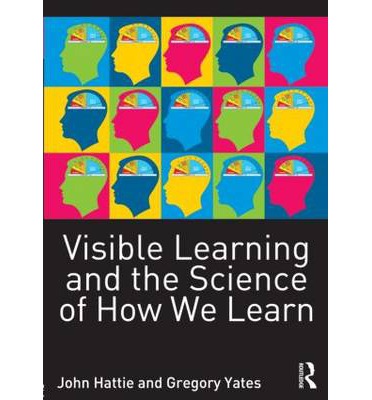
Some notes I took from a publication called Visible Learning and the Science of How We Learn by John Hattie and Gregory C. R. Yates.
• “Unless the material is strongly meaningful, relevant and timely, it is subject to rapid and substantial forgetting.”
• “Distributed practice is more effective than massed practice or cramming.”
• “It is far easier to build on coherently organised existing knowledge than it is to learn new material … When your prior knowledge is based upon misconception, however, it will create an obstacle, an effect called interference.”
• “Strong learning occurs when words and images are combined.”
• “When the mind actively does something with the stimulus, it becomes memorable.”
• “beginners benefit from clear step-by-step instructions and an absence of problem-solving tasks. On the other hand, highly knowledge- able learners may benefit from working on problems to solve and are held back by step-by-step instructions.”
I was most surprised to read this:
• “the VAK model. This model says that human beings, as individuals, naturally fit into one of three categories, associated with the input sensory systems that we use to process information: visual learners (V), auditory learners (A), and kinaesthetic learners (K) (or VAK, for short). It is said that most of us are visual learners and will benefit from instruction which features visual elements, imagery, or spatial relationships, at least when shown in visual form. Auditory learners benefit from hearing words and learn effectively through language and building vocabulary. Kinaesthetic learners learn from movement, from action, from doing things with their hands, and tactile resources in general. …
… we reach a clear conclusion: that there is not any recognised evidence suggesting that knowing or diagnosing learning styles will help you to teach your students any better than not knowing their learning style.”
You can read that article here. Consider how those findings affect your coaching, teaching and planning.
Anne Josephson:
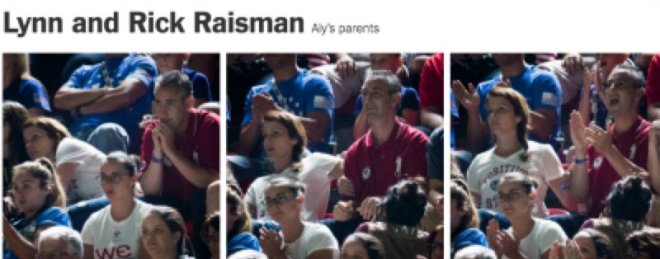
#7. Know your role. Coaches coach. Parents parent. In the words of Nellie Biles, “”My job is mainly support and to help keep her focused, relaxed and grounded.”
8 LESSONS GYM PARENTS CAN LEARN FROM THE PARENTS OF THE FINAL FIVE
Click through to see the rest.

 Gymnastics Coaching.com