I watched this classic hundreds of times back in the day.
1991 video with highlights of the best gymnastics from the 1960s, 1970s, and 1980s
Click PLAY or watch it on YouTube. (90min)
(via GymCastic)

tumbling, tramp, diving, acrobatics, circus, cheer, dance, martial arts, X sports … and more
I watched this classic hundreds of times back in the day.
1991 video with highlights of the best gymnastics from the 1960s, 1970s, and 1980s
Click PLAY or watch it on YouTube. (90min)
(via GymCastic)
Honoured last night at the 22nd annual International Gymnastics Magazine Hall of Fame (IGHOF) ceremony in Oklahoma.
All are super famous aside from Slava who’s been one of our best FIG Executive Committee volunteers since 1992. She would have been an excellent President of FIG but consistently declined to run.
If you’ve seen Rome Milan’s collection at an American Gymnastics meet, you will remember him.
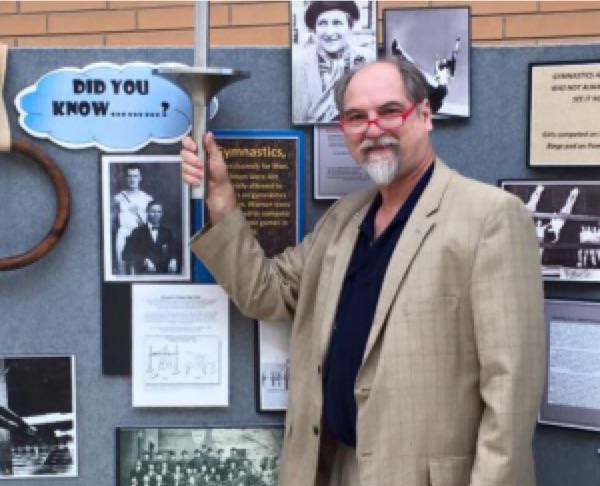
Rome is passionate:
I have a desire to educate young gymnasts of the evolution of the greatest sport on earth, Gymnastics.
For many years I have traveled to various gymnastics events around the country to display vintage equipment and historic pictures of the sport … in order to educate people.
Recently, I have been diagnosed with ALS. This has pushed me to complete the projects that I have began and to search for an opportunity to continue to promote these vintage Gymnastics Displays.
The campaign
… All expenses for travel, truck rental, signage, and purchases have been mostly on my own. Now with my diagnosis, it will be difficult to keep these displays going. I will need approximately $4000 to bring the display to National Gymnastics Congress in Rhode Island. Please help me bring the History and the evolution of our sport to the young athletes, so they can appreciate how our sport has evolved.
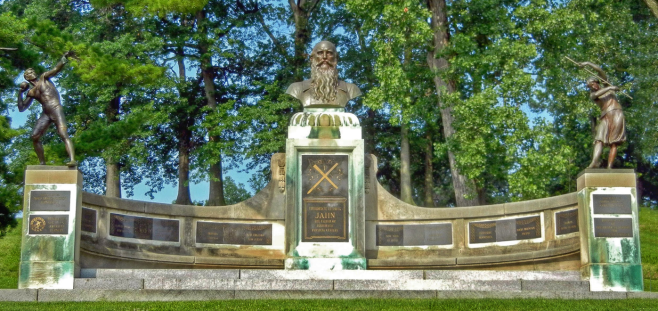
After NCAA Nationals while walking in Forest Park, close to the site of the 1904 Olympics, I happened upon this statue of one of the historical founders of Gymnastics.

On either side are statues of a male and female athlete.
Friedrich Ludwig Jahn (11 August 1778 – 15 October 1852) was a German gymnastics educator and nationalist. His admirers know him as Turnvater Jahn, roughly meaning “father of gymnastics” Jahn. …
The first Turnplatz, or open-air gymnasium, was opened by Jahn in Berlin in 1811, and the Turnverein (gymnastics association) movement spread rapidly. …
A man of populistic nature, rugged, eccentric and outspoken, Jahn often came into conflict with the authorities. …
Jahn promoted the use of parallel bars, rings and high bar in international competition. In honor and memory of him, some gymnastic clubs, called Turnvereine (German: Turnvereine), took up his name …
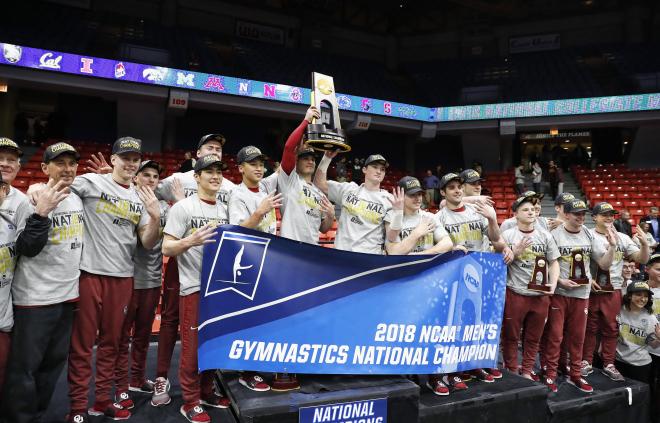
… finishing second to Oklahoma at the national championships on April 21 in Chicago. In what Burns called one of his proudest moments ever, the Gophers hit all 32 routines and earned 11 All-America citations.
Freshman Shane Wiskus of Mound-Westonka, the Big Ten Gymnast of the Year, was second in the all-around competition …
Burns was named the College Gymnastics Association Central Region Coach of the Year, and Wiskus was named Rookie of the Year.
Congratulations to Mike Burns, his staff and the Gophers.
His win has guaranteed him a place on Japan’s 2018 World Championships team …
And of course, a big shoutout to Kenzo Shirai for another National AA medal, this time repeating the silver he won in 2016 …

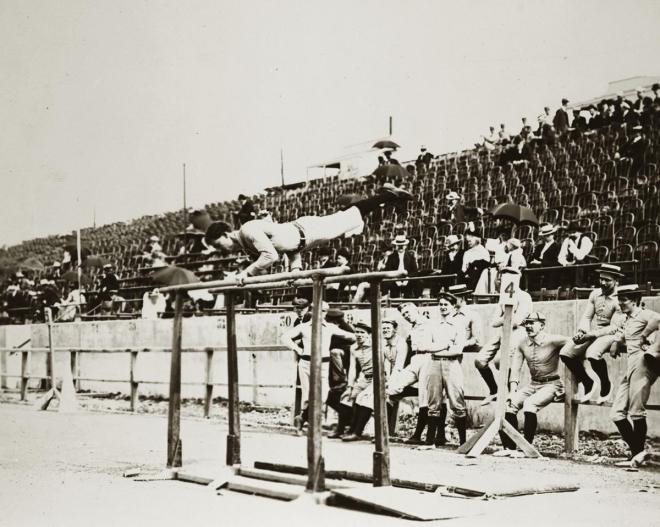
The 1904 Summer Olympics … was celebrated in St. Louis, Missouri … from August 29 until September 3, 1904, as part of an extended sports program lasting from July 1 to November 23, 1904 …
It was the first time that the Olympic Games were held outside Europe.
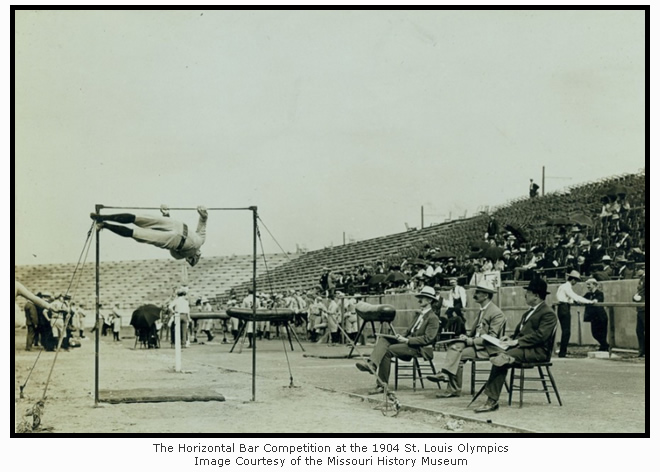
European tensions caused by the Russo-Japanese War and the difficulty of getting to St. Louis kept most of the world’s top athletes away. Only 62 of the 651 athletes who competed came from outside North America, and only 12–15 nations were represented …
The St. Louis organizers treated the Games in a manner similar to the previous Olympiad, with competitions reduced to a side-show of the St. Louis World’s Fair …
The participants totalled 651 athletes – 645 men and six women representing 12 countries. …
One of the most remarkable athletes was the American gymnast George Eyser, who won six medals even though his left leg was made of wood ….
Eyser competed with a wooden prosthesis for a left leg, having lost his real leg after being run over by a train. Despite his disability, he won gold in the vault, an event which then included a jump over a long horse without aid of a springboard. …
Apparatus: Clubs, Horizontal Bar, Parallel Bars, Pommel Horse, Rings, Rope Climb, and Vault.
The AA Champ was Julius Lenhart.
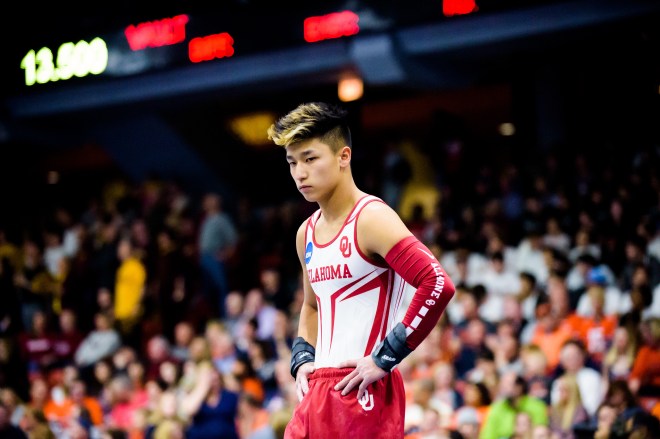
“Yul’s been amazing. He won the all-around by almost four points.
He obviously was the difference between our winning and being second.
He’s an incredible kid; humble, works hard all the time, I have to slow him down to keep him healthy at times. But when it’s go time he is a fierce competitor and I’m just so impressed when he goes out there and has days like today.”
– Mark Williams
(via Logan Bradley)

 Gymnastics Coaching.com