gymnasts and growth plate damage

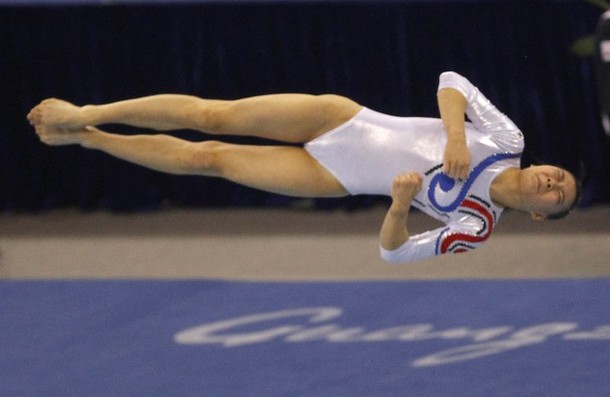
Gymnasts are vulnerable, especially male gymnasts, especially during the phase of “peak growth velocity”.

During that phase coaches are advised to reduce hard tumbling and vaulting. Land on soft surfaces. And be very cautious when the athlete reports pain near growth plates.

Certainly there is a great deal of individual variation in growth. Many gymnasts are “late maturers”.

Those images are taken from an excellent report by Istvan Balyi & Richard Way, The Role of Monitoring Growth in Long-Term Athlete Development November 20 2009 (PDF)

Some conclusions:

Monitoring growth before, during and after the adolescent growth spurt is very important for coaches to be able to create an individualized plan to optimize athletes’ development.

• Growth measurements are needed to monitor growth.

• Plotting growth will help to identify the onset of the growth spurt

• Before the onset of the growth spurt standing height should be measured on every birthday, or at the beginning of the annual training cycle in clubs.

Most coaches are not measuring growth velocity in 2011. … They should be.
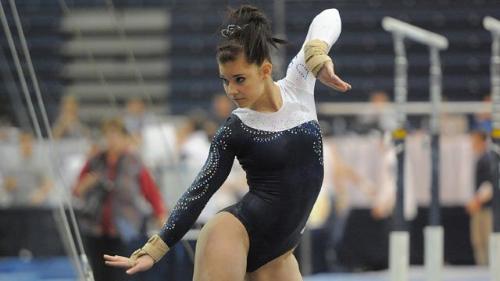
Celine van Gerner – Beam

GymNiceTic – Dutch gymnast Celine van Gerner looks good!

56.066 AA with one fall.

Celine van Gerner, Dutch European Trials BB, Opmeer 5-3-2011

Click PLAY or watch her Beam on YouTube.

amputee tumbler

Becky sends us this link.

1. This is amazing.

Click PLAY or watch him on YouTube.

2. This is dangerous.

Get some coaching, dude. You’re going to hurt yourself.

And NO, I’m not linking to your double back.

gymnastics month in review

Blythe Lawrence caught up on the major happenings of late. A few stories I missed:

Daniel Keatings returned to AA competition at Scottish Championships.

• She’s the NCAA’s no. 1 all-around gymnast. But before coming to college, Penn State’s Sharaya Musser battled a life-threatening MRSA infection.

• Record crowds in Utah: More than 15,000 fans showed up to watch the Utes take on the no. 1 Florida Gators in Salt Lake City Friday night.

• Chrystal Chollet-Norton steps down as coach of Rutgers

• Dutch injury woes

• coach Bob Nelligan in Bermuda

• Remembering Frank Bare

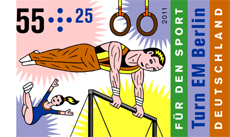
• 25 cents from the sale of each stamp will go to support German athletes

details on Gymnastics ExaminerThe gymnastics month in review

gymnast Kerensa Mitchell

Kerensa is a Canadian gymnast with a goal to compete in the NCAA.

Click PLAY or watch her Bars on YouTube.

Update. Click PLAY or watch a recent Beam routine on YouTube.

See her recruiting site on GymDynasty.

You can get a site like that for your gymnast by contacting Sara Gill via GymDynasty.

introducing backward hip circle

The latest tutorial by JAO.

Training back hip circles with an emphasis on getting into the tap swing in the level 5 routine.

Click PLAY or watch it on YouTube.

In addition to the cast to ‘hollow’ position, I like to have beginners do some from cast to ‘archy’ position. (The timing of the late drop is easier.)

Simultaneous with these drills, it would be ideal that the gymnast is learning backward uprise to backward hip circle on straps bar.

If you’re not confident to spot the ‘airplane propeller’, the alternative is to do backward hip circle series without spot until the gymnast can do 2 or 3 in series with speed and tight body. That will take longer, however.

South Korea hires Chinese Coach

The South Korean female artistic gymnastics squad has hired a Chinese coach to prepare for next year’s Summer Olympics, South Korean officials said Tuesday.

Chen Shijing will join South Korean gymnasts at the National Training Center in Taeneung, northern Seoul, later Tuesday, according to the Korea Gymnastics Association. Chen had been a coach at a Chinese national training center built by Li Ning, a three-time Olympic gymnastics gold medalist. …

Yonhap

They hope to qualify for the London Olympics with a full team.

That’s via the Chinese Gymnastics Blog.

South Korea's Kim Ye-eun

Alabama Jumbotron intro video

The Tide is ranked #2 this week and could win it all at Championships.

Click PLAY or watch it on YouTube.

(via College Gymnastics Board)

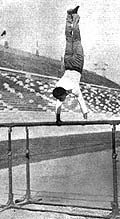
gymnastics – History of Parallel Bars

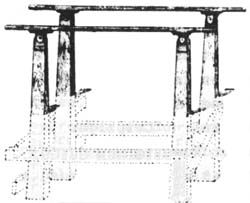
Without any doubt, the parallel bars are an invention of Friedrich Ludwig Jahn, who put up three trestles in his “Hasenheide” in Berlin …

Initially, the parallel bars were set in the ground. About 30cm under the ground they were fixed with a wooden plank …

Gymnastics at parallel bars were also part of the Olympic Games in Athens 1896.

The German Alfred Flatow is the first Olympic Champion on bars …

In Helsinki in 1952, there were still a lot of broken poles (at the uneven bars as well); only in the mid 1950ies the German Richard Reuther presented “multipurpose parallel bars”. …

read more

Each Wednesday we are linking to a different apparatus posted on GymMEDIAApparatus HISTORY. (English and German)